VERTICAL HORIZONS – group exhibition
VERTICAL HORIZONS – Placing the horizon vertically
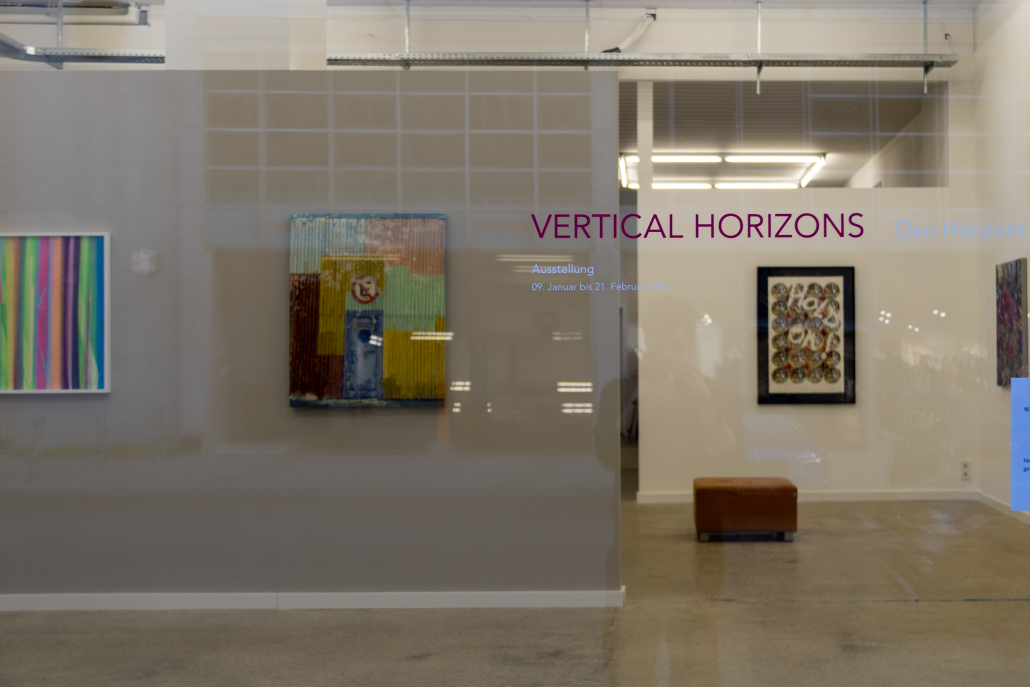
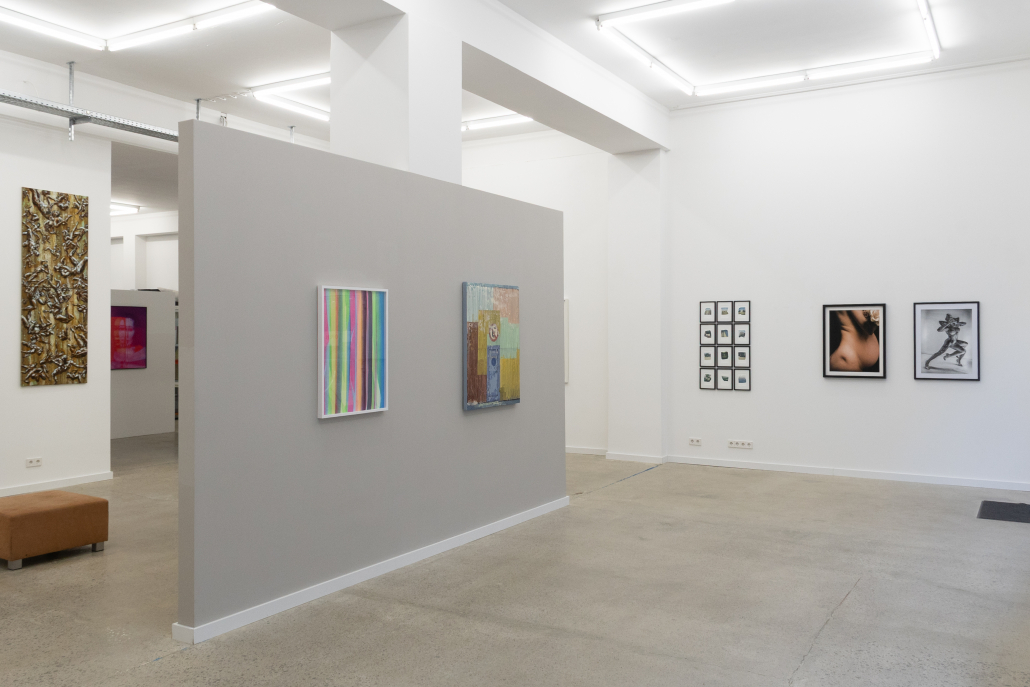
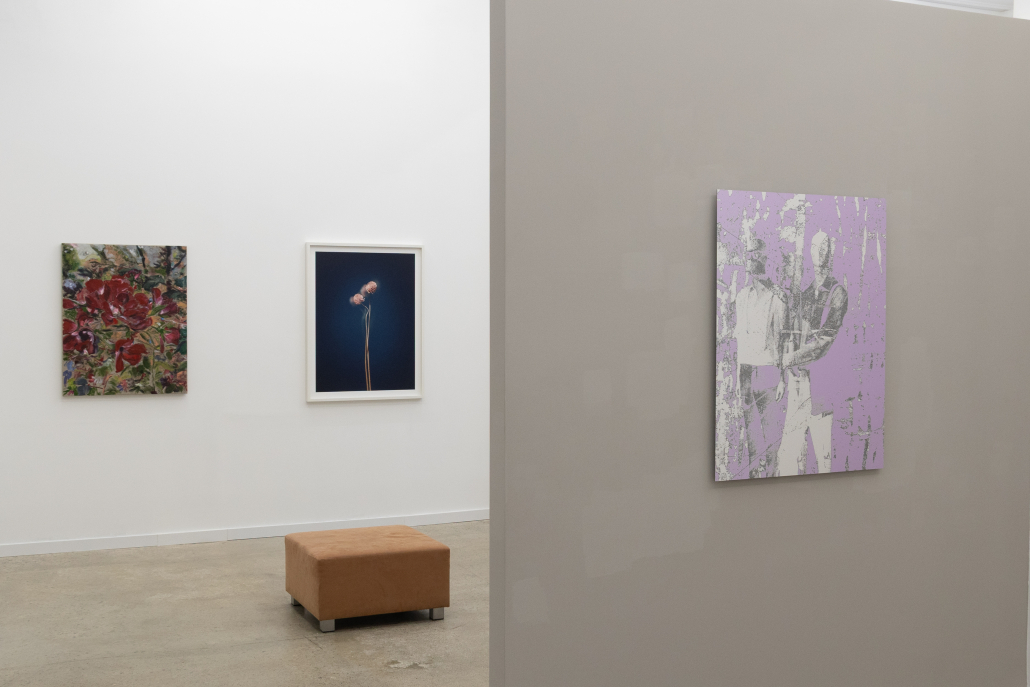
With the exhibition VERTICAL HORIZONS, we are presenting a powerful artistic statement about attitude, vulnerability and resistance at the beginning of 2026. Twenty-three artists are exhibiting paintings, photographs, works on paper and sculptures – works that confront the current social climate, in which polarisation, exclusion and extreme tendencies are on the rise.
Programme:
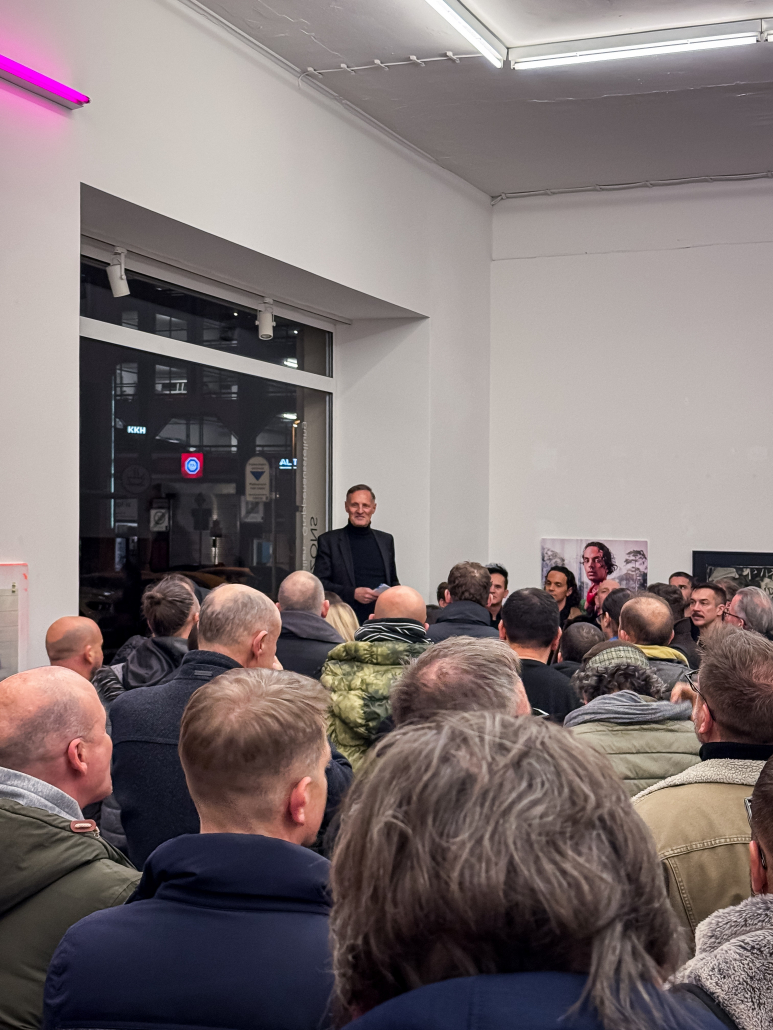
Thursday, 08 January 2026, 6 p.m.
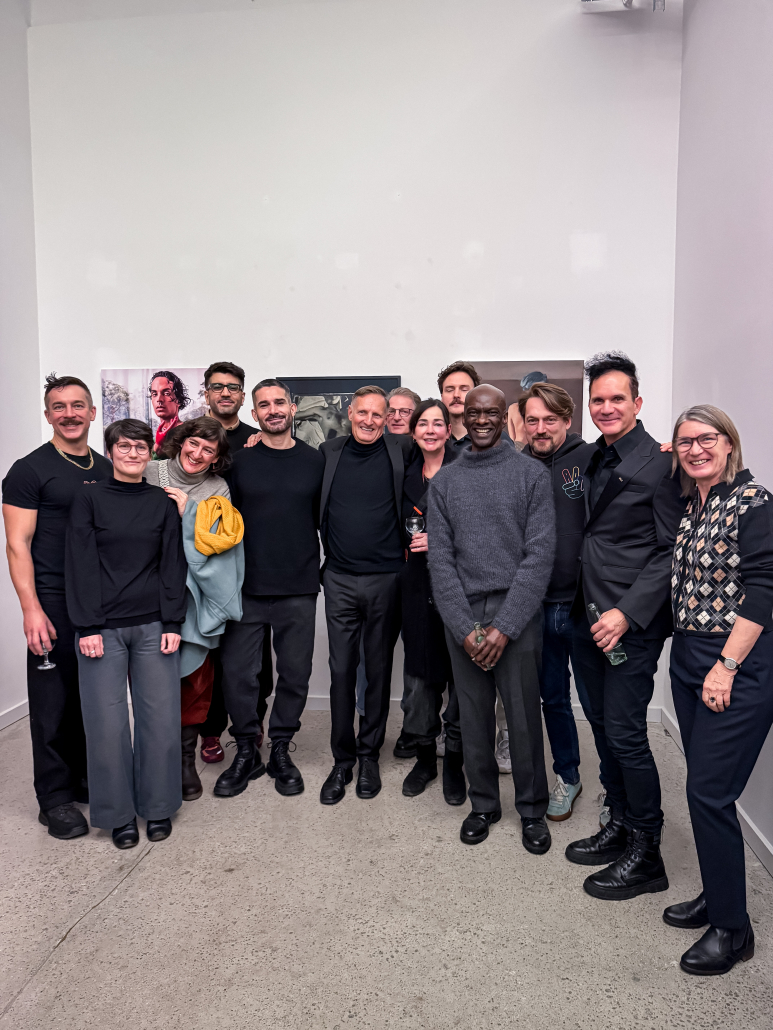
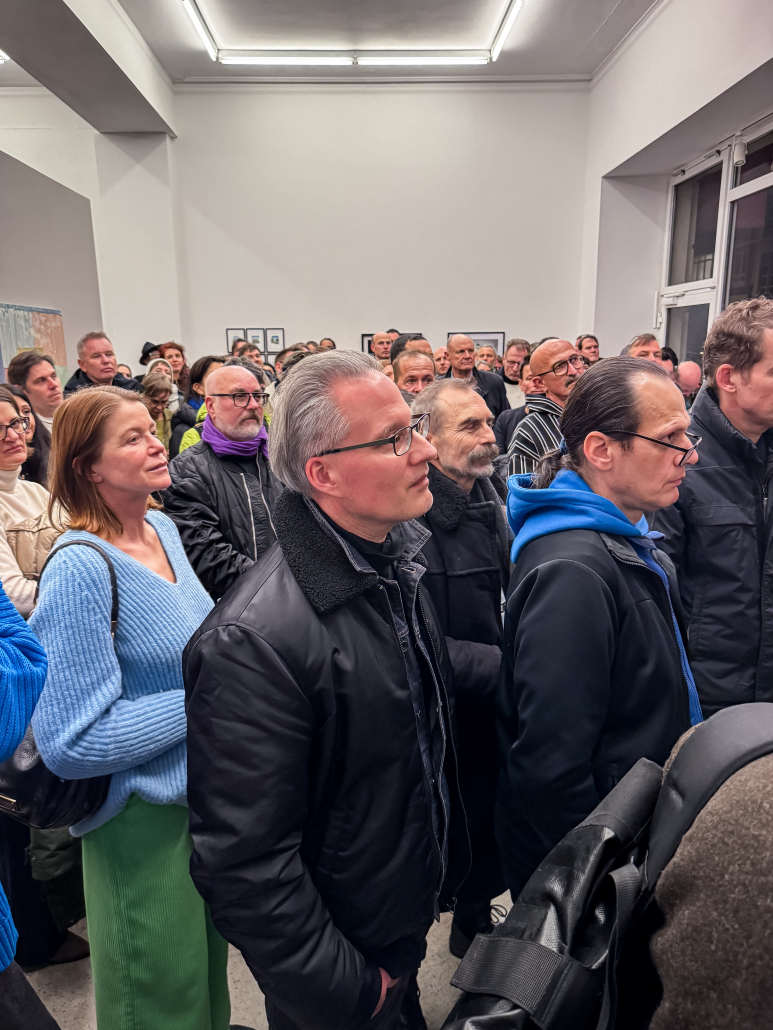
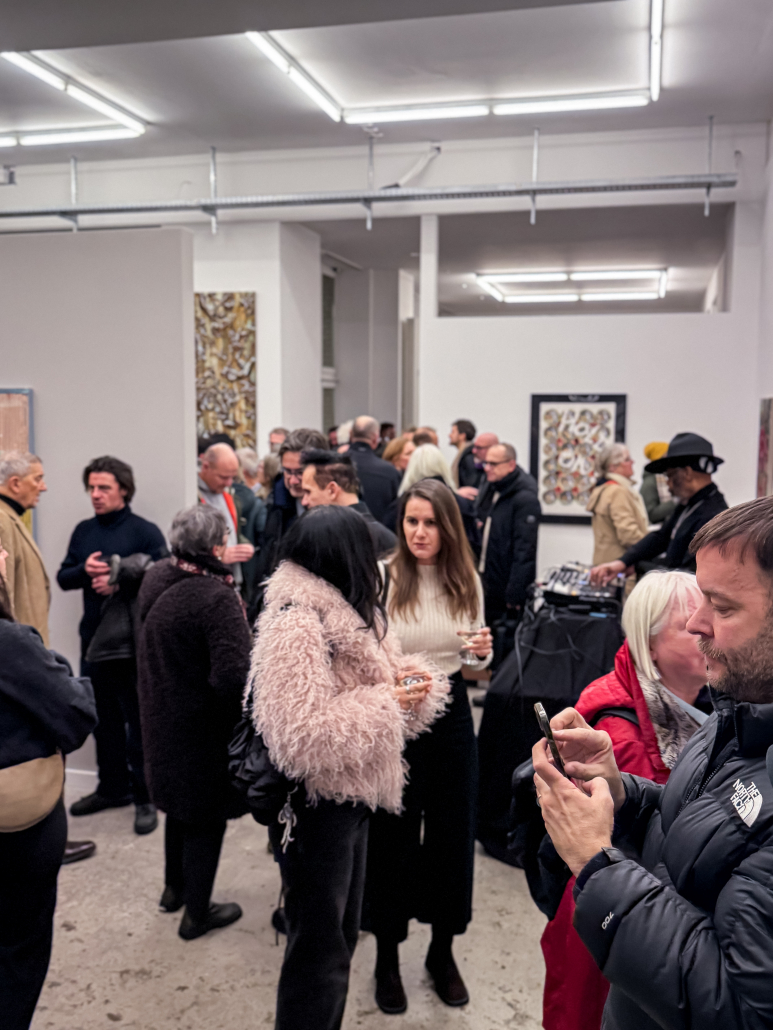
Vernissage. The artists will be present.
DJ Mandel Turner is playing.
Saturday, 31 January 2026, 4 p.m.
Guided Talk with artists of the exhibition
Saturday, 14 February 2026, 4 p.m.
Guided Talk with artists of the exhibition
Saturday, 21 February 2026, 5 – 7 p.m.
Finissage
Placing the horizon vertically means changing perspective – away from the comfortable view into the distance, towards an attitude that takes responsibility.
With VERTICAL HORIZONS, we are opening a space in which art takes a stand – quitly, poetically and uncompromisingly human. 23 artists address themes that shape our coexistence today: vulnerability, identity, empowerment, migration, queer bodies, memory, resistance. They show the beauty of fragility, the courage of the visible and the power of quiet defiance. This exhibition is not a loud protest. It is an appeal for empathy – and for the responsibility not to look away. We invite you to raise your gaze. To rethink the horizon. And to experience how art finds a language that touches, irritates and connects.
The exhibition brings together 23 exclusive original works, unique pieces and small limited editions, which, in their thematic and aesthetic coherence, offer a rare overview of relevant contemporary artistic positions. The participating artists
Sabine Beyerle, Anna Borowy, Andreas Bromba, Giampaolo di Cocco, Philip Crawford, Daniela Finke, Farzin Foroutan, Daniel & Geo Fuchs, Birgit Naomi Glatzel, Dale Grant, Deni Horvatić, Ivar Kaasik, Marco Kaufmann, Jörg Kujawa, Miguel Mas, Georg Meyer-Wiel, Jan Prengel, Omri Emile Rosengart, Richard Schemmerer, Violetta Elisa Seliger, Tanja Selzer, Mathias Vef, Leonie Vogel and Martin A. Völker
reflect on questions of identity, memory, migration and physicality – themes that are increasingly regarded as key concepts for a new generation of ‘empathic artists’ on the international art market. Many of the works on display are unique pieces or first editions from new series created exclusively for this exhibition.
VERTICAL HORIZONS is not an exhibition about politics, but about people. The works open up spaces for compassion, debate and hope.
Three thematic clusters structure the exhibition:
‘Ver-Letzt’ – on vulnerability, dignity and the power of acceptance
The focus here is on works that deal with fragility, pain, but also with the dignity of the vulnerable. The ‘wounded body’ can be interpreted both literally and metaphorically – for example, as a symbol of attacked identities or suppressed narratives.
‘Un-Orte’ / ‘Non-places’ – spaces of exclusion and encounter
Photographs and paintings depicting social topographies: places where power relations manifest themselves, for example in architecture, in urban space, in the gaze of others. Who is allowed to be here? Who remains invisible?
‘Trotz’ / ‘Defiance’ – resistance, beauty, hope
This section includes works that do not content themselves with the role of victim, but instead stage the power of perseverance. With quiet perseverance, with defiance, with humour. This section is also about empowerment, artistic self-empowerment and the right to complexity.
A special highlight of the vernissage is the performance ‘UmSichtbar’ (Visible) by Leonie Vogel, who uses an improvised fabric figure to make the interplay of protection, revelation and change of perspective a sensual experience.
The ‘guided talk’ is a mixture of an artist talk and a guided tour with explanations of the exhibition. We will talk about the creation and background of the exhibition, and some of the participating artists will be present to say a few words about their works. We look forward to talking with you.
Sabine Beyerle
‘Un-Orte’ / ‘Non-places’ – spaces of exclusion and encounter
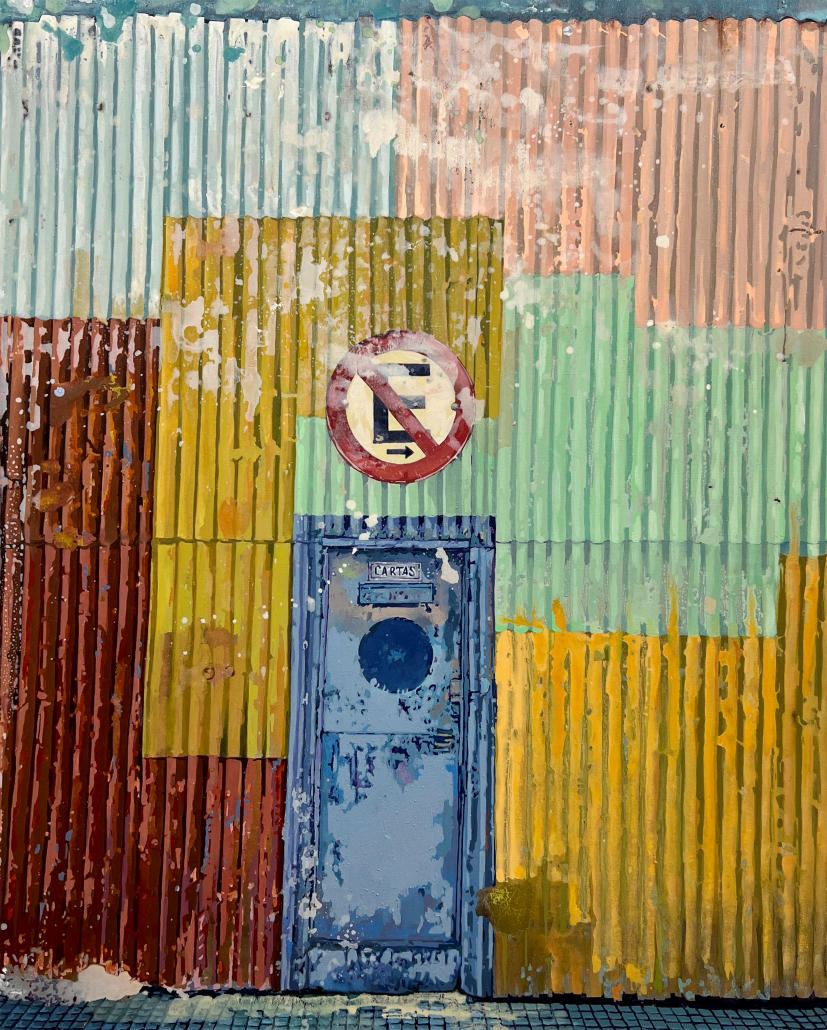
Amarillo, 2025
Oil and acrylic on canvas, 100 x 80 cm
The artist explores the tension between vertical and horizontal lines. The horizon appears only marginally, the view is captured by a frontal wall of colourfully painted corrugated iron. What initially appears to be a forbidding barrier unfolds an unexpected visual depth through its porous surface and the pastel layers of old paint. Traces of improvisation, weathering and overlaying lend the work a multi-layered materiality. The inspiration comes from a remote region of Patagonia where natural building materials are scarce. Existing materials are reused over decades. This sustainable practice creates unconscious colour and form compositions that are hidden in inconspicuous places. It is precisely these randomly created colour fields that fascinate the artist – abstract surfaces that weave themselves into subtle, almost painterly compositions in urban space. With this work, the artist invites viewers to discover beauty in the brittle texture of everyday life, to perceive traces of time and use, and to take a fresh look at the fragile materiality of our environment.

Sabine Beyerle (*1975 in Leonberg, Germany) studied Fine Arts at the Berlin University of the Arts. She completed her master’s degree there in 2003 and has been working as a freelance artist since 2004; she works from her own photographic templates, which she weaves into a dense, sometimes multi-perspective pictorial complex in her paintings. She has received various awards and residency grants and is represented in many German and international collections. The artist lives and works in Berlin.
Anna Borowy
‘Trotz’ / ‘Defiance’ – resistance, beauty, hope
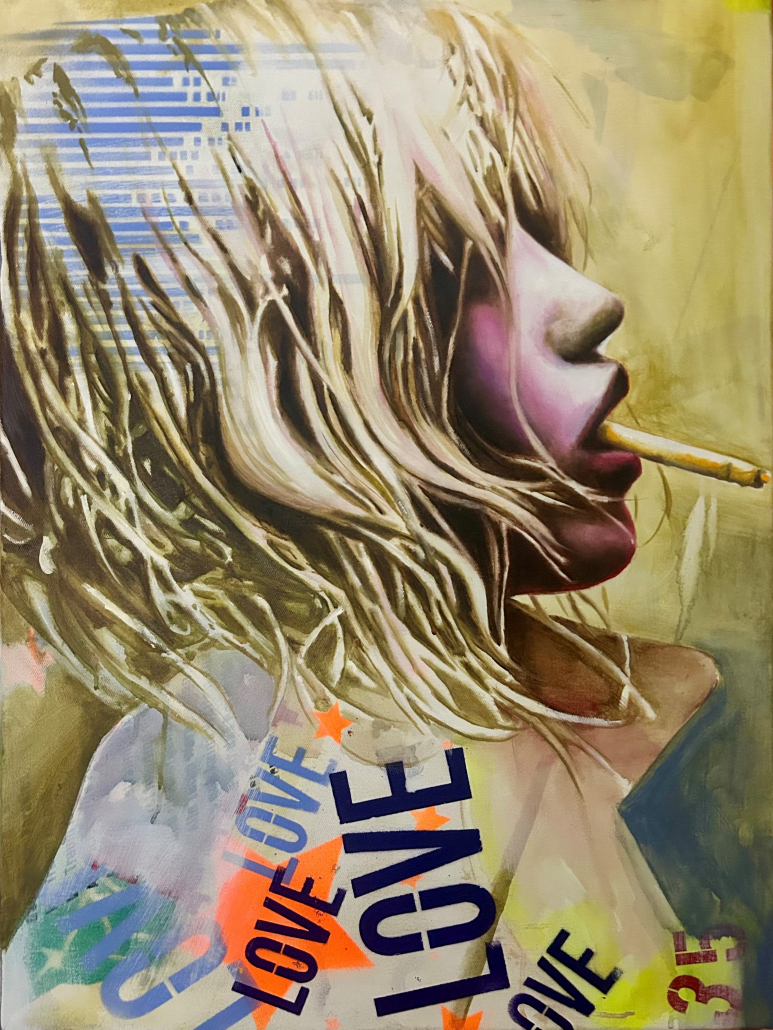
Lilith, 2025
Oil on canvas, 80 x 60 cm
In a world filled with the noise of war, political powerlessness and the erosion of human values, beauty emerges in this work as an act of resistance. Not as an escape into superficiality, but as a conscious counter-movement – a delicate yet determined assertion of meaning, dignity and hope. The woman depicted embodies not the object of a gaze, but the subject of an inner strength. Her calmness is defiance. Her grace is poise. Her vulnerability becomes a source of creative energy. Beauty appears here as a primal feminine force – as a creative, healing principle that ignites light in the midst of darkness. At a time when fear and cynicism dominate the discourse, the image becomes a manifesto for another possibility: beauty as a reminder that gentleness is strength. That beauty – in the broadest, deepest sense – does not seduce, but transforms. That aesthetics can give rise to empathy, and empathy to hope. This work draws on the ‘divine feminine energy’ – that creative power that nourishes, connects and heals. It believes in the good in people, not naively, but as a conscious decision against resignation. Beauty here becomes an act of faith: a vision of a world in which compassion, sensuality and sincerity are allowed to find their place again. The painting is thus not merely a representation, but an invitation – to all of us – to understand beauty as a living form of resistance. Lilith is a call not to avoid darkness, but to permeate it with beauty – until an image that carries hope reappears in the mirrors of the world.
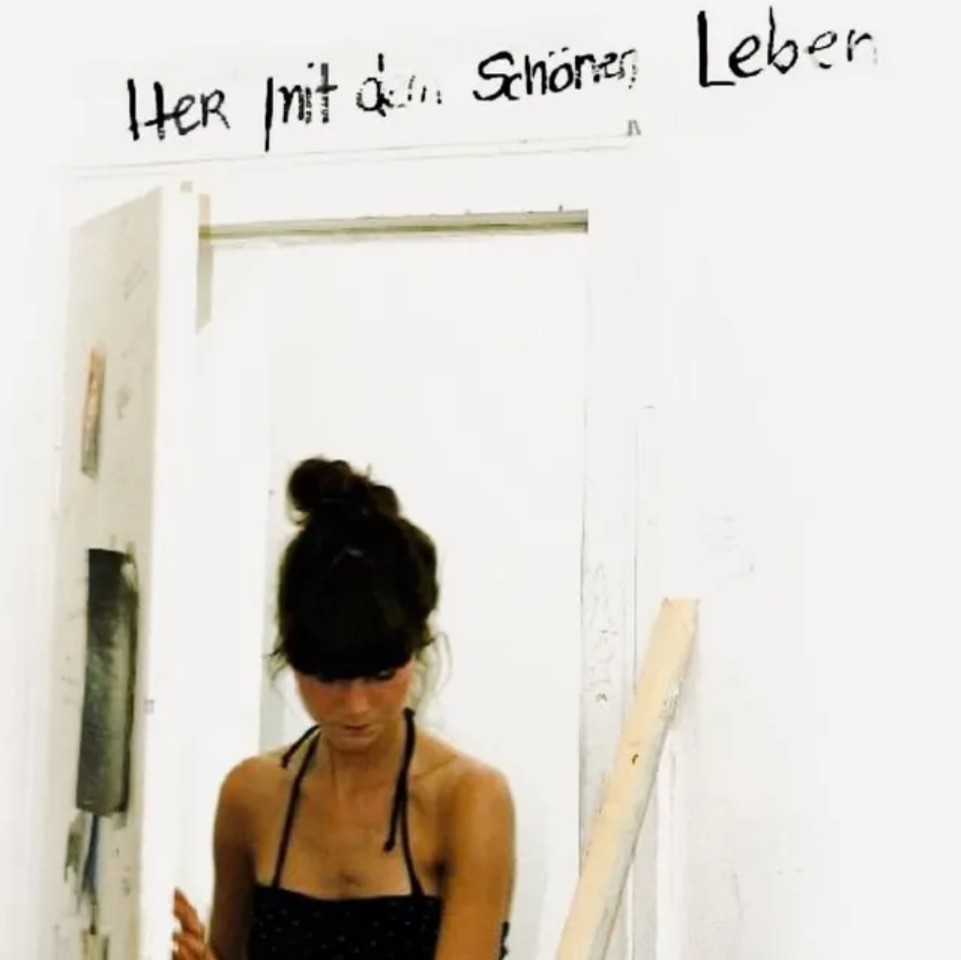
Anna Borowy (*1985 in Uelzen, Germany) first completed her studies in Bad Pyrmont from 1999 to 2004 before working in Ralph Siegel’s studio at the Städelschule in Frankfurt in 2003/04. From 2004 to 2010, she studied painting at the Berlin-Weißensee Academy of Art, where she was named a master student in 2011. In addition to numerous exhibitions, she is the founder of the art project I SEE YOU, launched in 2021, which realises interdisciplinary exhibition formats with renowned artists. Her works are included in important collections, including the Fürstenberg Collection, the Boulakia Collection in Paris and the Biergemann Collection at the Museum Ahrenshoop. The artist lives and works in Berlin.
Andreas Bromba
‘Un-Orte’ / ‘Non-places’ – spaces of exclusion and encounter
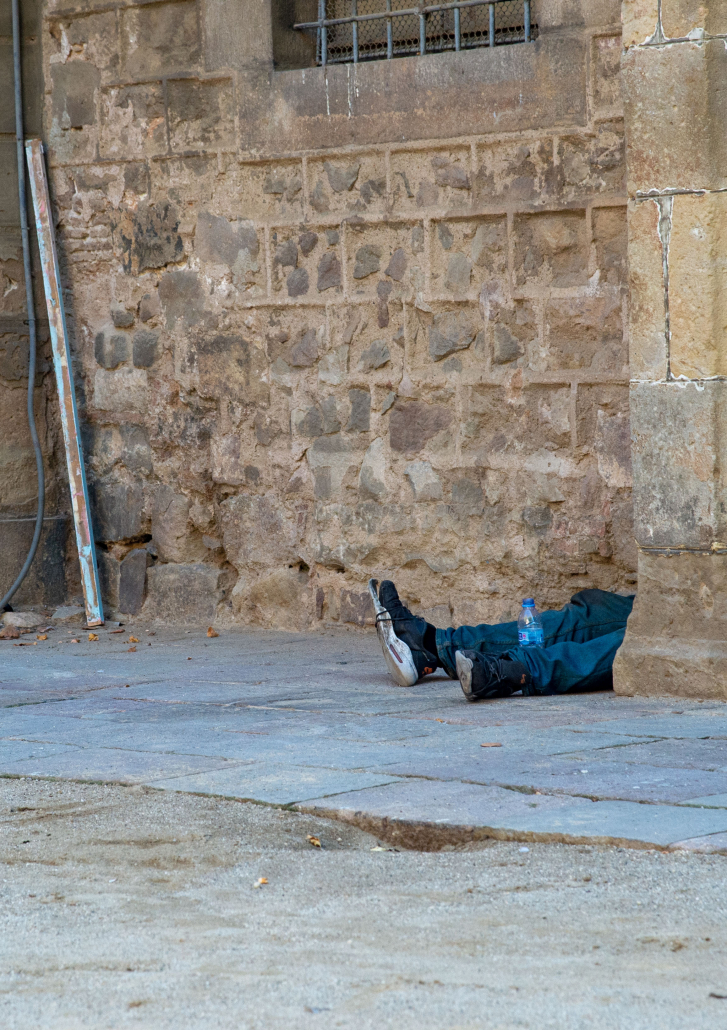
Barcelona, 2022
Fine Art Print on Hahnemühle Photo Rag,
80 x 60 cm
Edition: 1/5 + 1 AP
Barcelona, lunchtime. A city that sells itself anew every day: as a sun-kissed paradise, a vibrant cultural metropolis, a shining promise of a better life. But right at the entrance to the venerable National Library, a young man lies in the dust, drunk, exhausted, made invisible. The walls of the former hospital, now an architectural gem, form the backdrop to a reality that many would prefer to ignore. His legs protrude into the room, an involuntary statement: here I am. Whether you want to see me or not. Just a few metres away, the stream of tourists flows past – smartphones raised, searching for the next beautiful motif. No one spares a glance for this body in the shadows. It is too uncomfortable, too close, too real. The poverty that has accompanied Barcelona for years stands in stark contrast to the shiny surface that the city so carefully maintains. Those who lie here fall through every grid, every net, every symbolic policy. This image is not a snapshot, it is a symptom. It shows not only a single person in need, but a Europe that is learning to look away. A continent that celebrates beauty and ignores misery, as long as it lies deep enough in the shadows.
Andreas Bromba (*1967 in Wiesbaden, Germany) is a photographer and installation artist. He was influenced early on by his art education studies with a focus on photography in Frankfurt am Main (1989–90), his training in fashion graphics at the Frankfurt School of Fashion, Graphics & Design (1990–91) and his studies in art history at the University of Hamburg (1992–95). His serial works combine clarity, precision and emotional depth, oscillating between reduction, lightness and quiet power. Since 2000, he has exhibited nationally and internationally – in Berlin, Hamburg, Kaliningrad, Dresden and Austria, among other places – and is regularly represented at art fairs. The artist lives and works in Berlin.
Giampaolo di Cocco
‘Un-Orte’ / ‘Non-places’ – spaces of exclusion and encounter
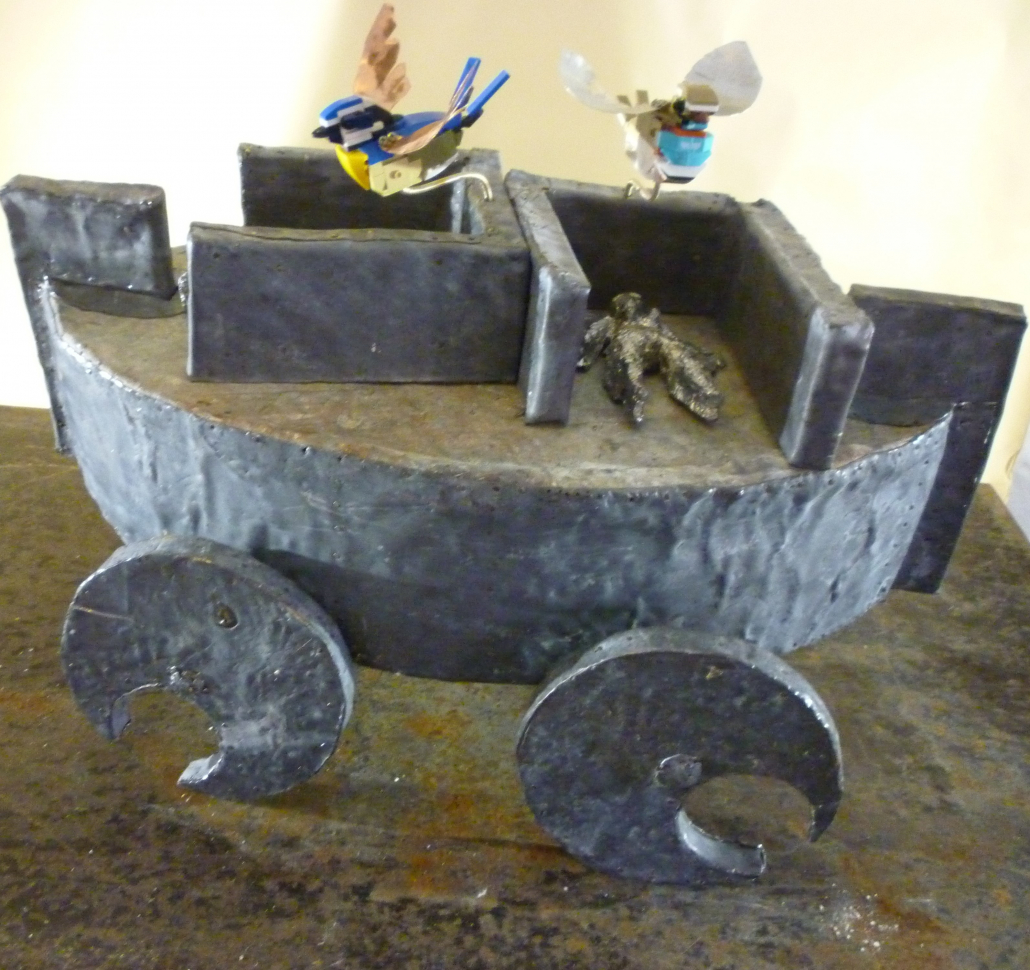
Arianna on Naxos, 2025
Lead on wood, small plastic models,small lead figures,
65 x 45 x 40 cm
The work depicts a male and a female body. These bodies lie in two different and separate rooms, but there is enough space around them so that the bodies can meet, albeit only theoretically. The entire scene takes place on a large ship with wheels, representing travel through space and time. Two birds accompany the bodies as representations of their ethereal souls. The separation of the bodies is a reference to the theme of the exhibition, which is about diversity and searching.
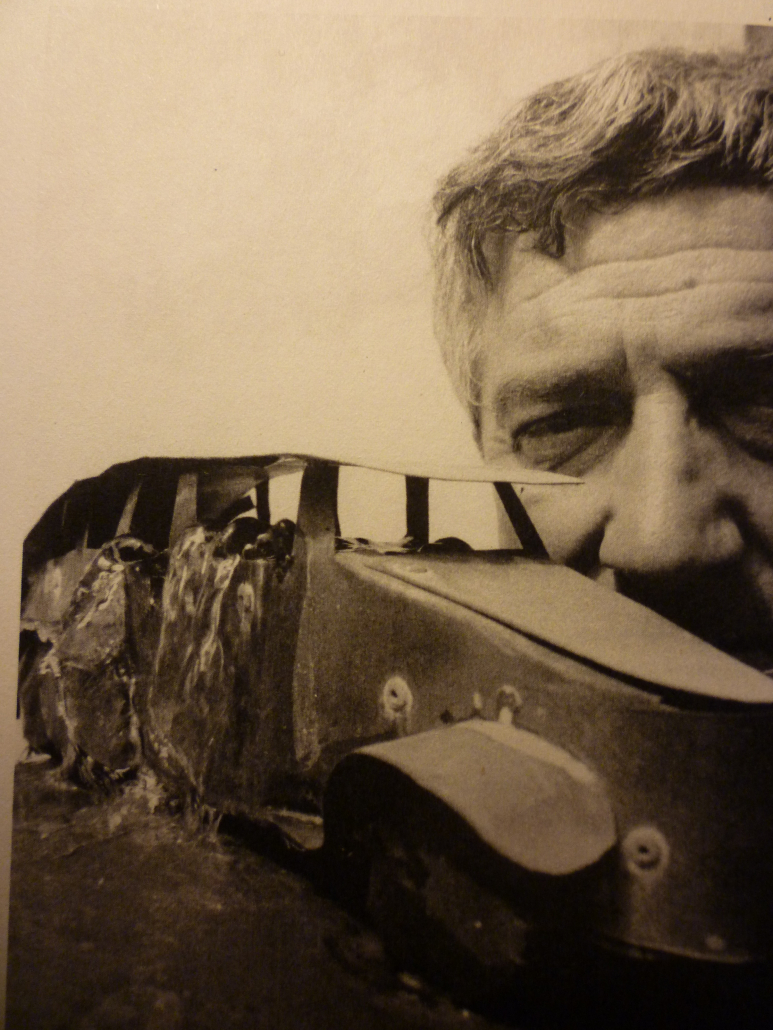
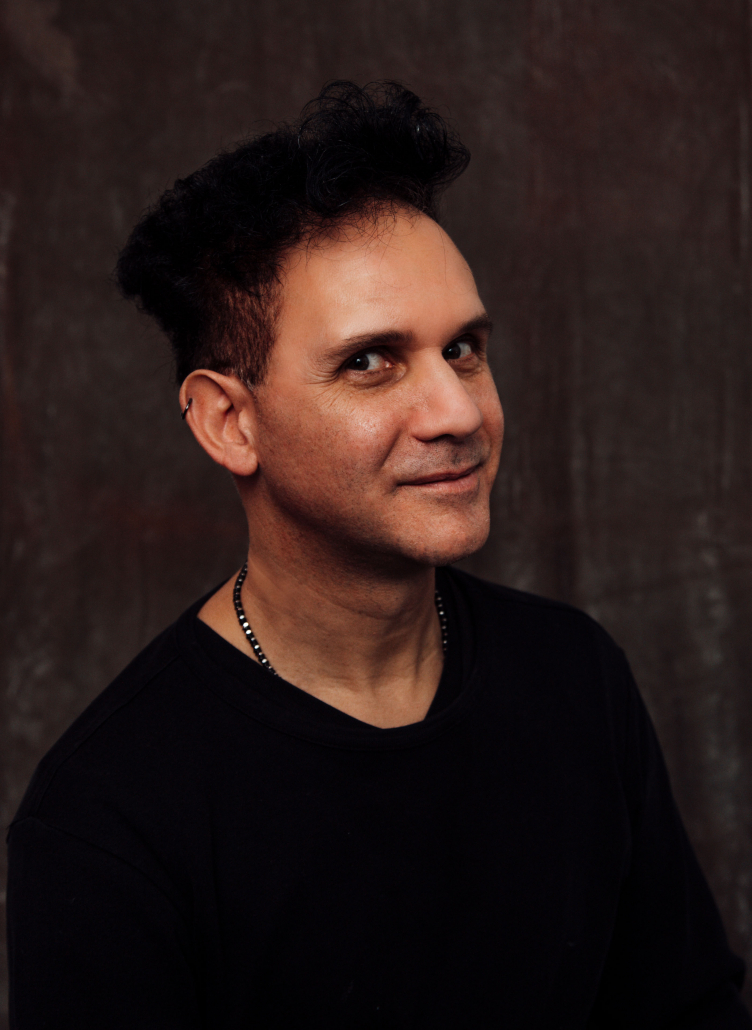
Giampaolo di Cocco (*1947 in Florenz, Italy) is an artist, architect and author. After studying architecture in Florence and painting at Cologne University of Applied Sciences, he developed an interdisciplinary body of work spanning sculpture, installation, film and literature. His works have been exhibited internationally, including in Florence, Milan, Berlin, Cologne and New York, and are represented in public collections. He lives and works in Berlin and Kunow (Brandenburg).
Philip Crawford
‘Ver-Letzt’ – vulnerability, dignity and the power of acceptance
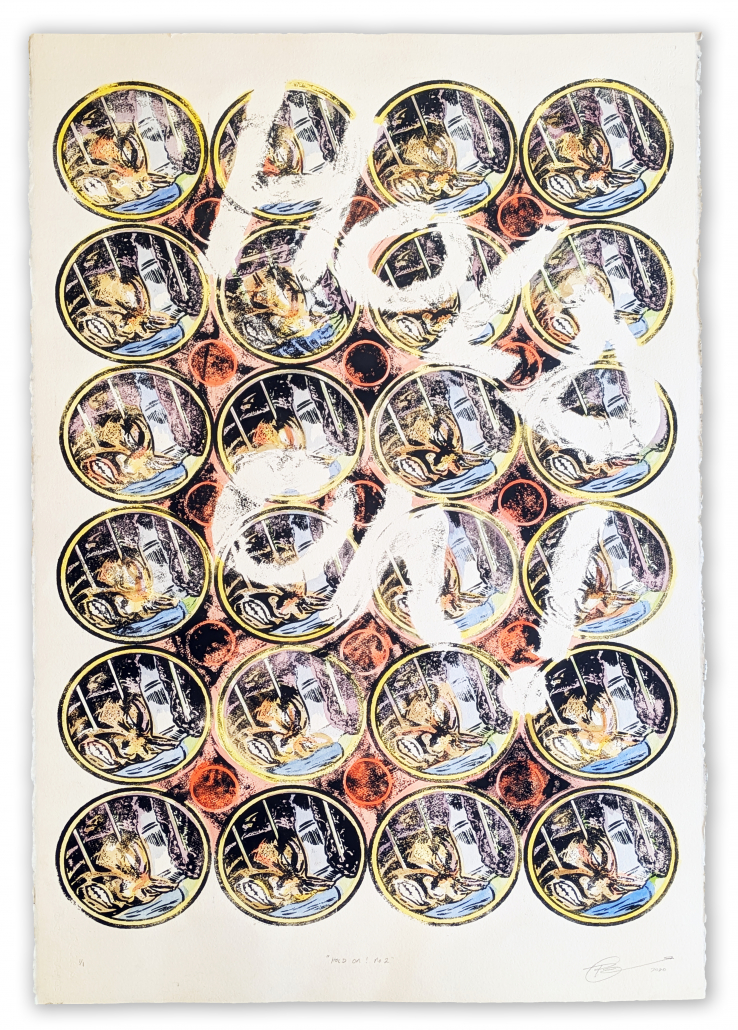
Hold On! No. 2, 2020
Woodcut and watercolour on Hahnemühle Paper,
102 x 67 cm/framed 123 x 88 cm
In this series of prints, the artist uses comics as the primary means of exploring collective memory and the processes of identity formation. Created primarily using watercolour and relief printing techniques, the series mimics the mass-produced aesthetic of early halftone printing. Thematically, the images and phrases used explore the intersections between praise, protest and heroism. In particular, the repeated phrase ‘Hold On!’ refers to a lyrical refrain from an African-American gospel song (‘Keep Your Hand on the Plow’). Over the decades, this refrain has been reused in folk music, civil rights protest songs, advertising and propaganda, and hip-hop/pop samples. The artist is impressed by the enduring power of these simple words and the diversity of their meanings – sometimes representing both resistance and resignation at the same time.
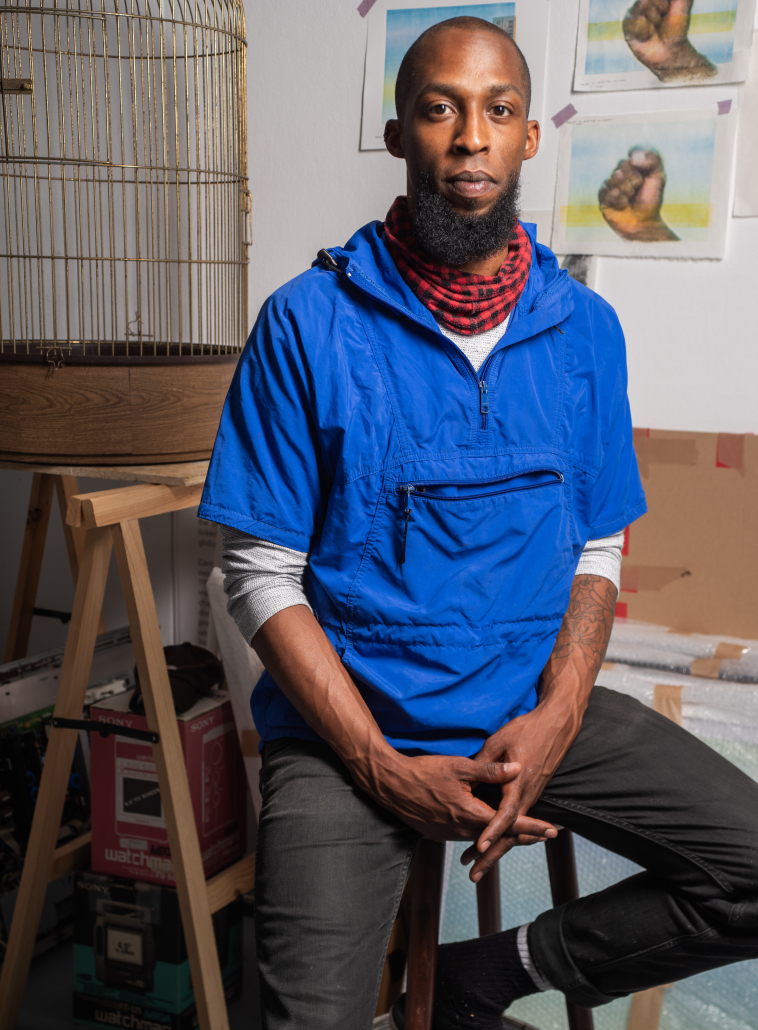
Philip Crawford (*1988, Texas, USA) is an US-American artist based in Berlin. His studio practice combines critical essays, works on paper, video, sculpture, and installation in a wide-ranging study of popular representations and “fast images”. Philip holds a B.A. in History from Stanford University and an MFA in Sculpture from the Tyler School of Art and Architecture. His work has been exhibited in the United States, Germany, and the Czech Republic.
Daniela Finke
‘Ver-Letzt’ – vulnerability, dignity and the power of acceptance
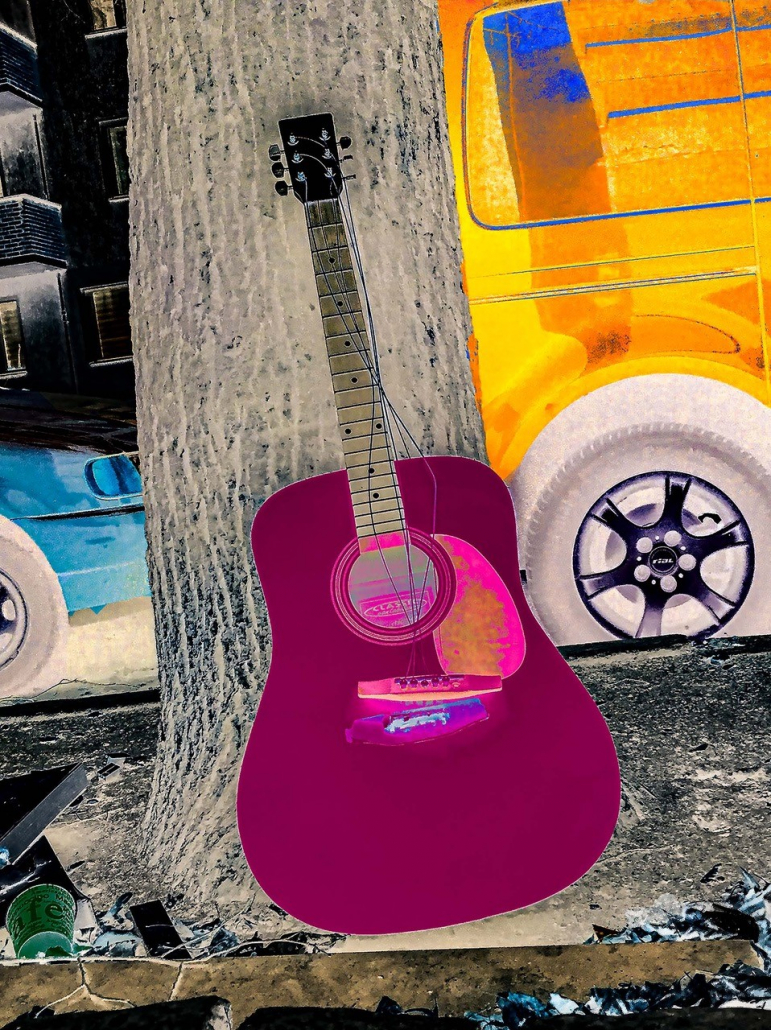
People Have the Power, 2025
Art Sec, Fine Art Print on Alu Dibond,
behind matte acrylic glass, 100 x 74,5 cm
Edition: 1/3 + 1 AP
For the artist, the guitar is not just an object, but an active feminist statement – an instrument that wants to be heard. It stands for the female voice, for protest, for the longing for expression and freedom. A stringless guitar has been silenced, but it still carries the sound within it. Daniela Finke: “On my way to my studio, I find a pale figure between rubbish and parked cars. A guitar leans against a tree, broken strings, the bridge broken. I stop; chords begin to sound inside me, and coulors appear. The desire to restore this guitar’s dignity marks the beginning of the artistic process. I create a documentary record of reality, photography as a sober testimony, as a starting point, not as a goal. I transform this photographic image using digital negative reversal. The shift in colour values towards shades of pink and purple gives the guitar a new presence. The strength and dignity that once characterized the instrument return, allowing it to shine once more. A sign of decay gives way to an image of hope: the power of music that resists oppression and resounds anew.” “In my personal life, visual arts and music are transformative forces. They open up spaces for expression, resistance, and visibility. The guitar has a female voice that cannot be silenced. People Have the Power is a call to see and use this power. In the visual arts, in music, and in society. It is about visibility, about reclaiming dignity, and about courage in times of oppression.”
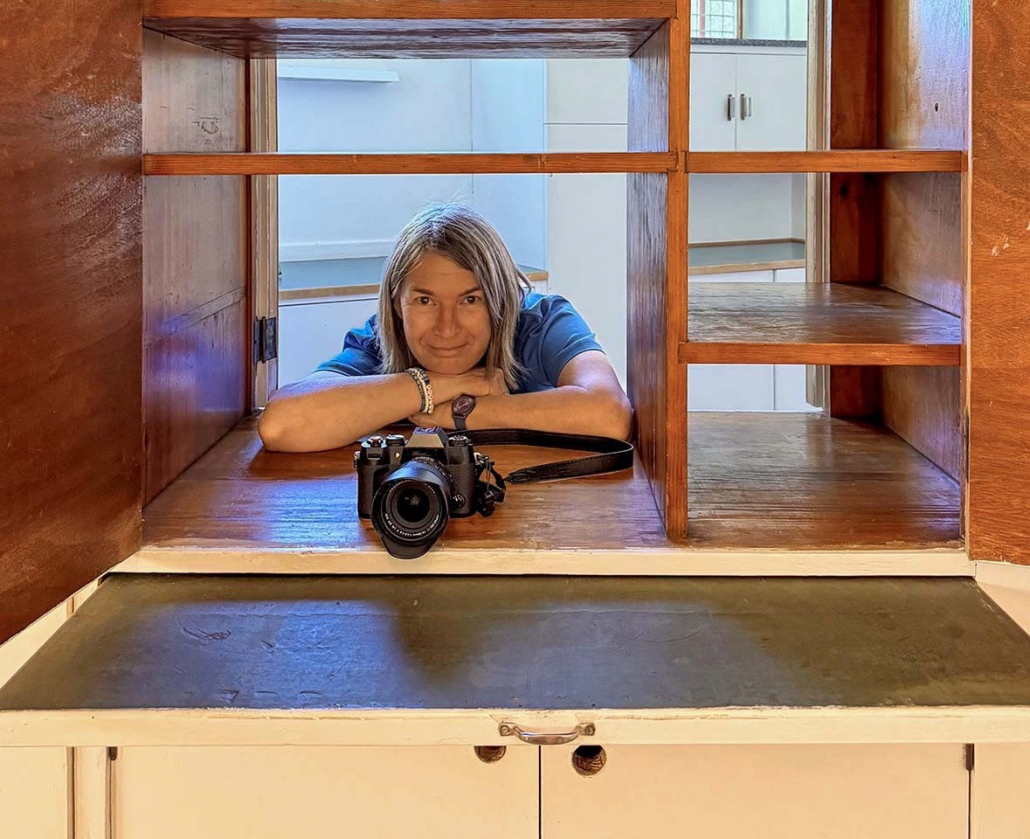
Daniela Finke (*1958 in Hannover, Germany) works as a visual artist in the field of digital photography. Playing with reality and illusion, compositional boldness and brilliant colouring have become her trademark, bodies, architecture, everyday objects, or natural phenomena are her themes. Daniela Finke has received numerous awards for her work; her works have been exhibited nationally and internationally and are represented in public and private collections. The artist lives and works in Berlin.
Farzin Foroutan
‘Ver-Letzt’ – vulnerability, dignity and the power of acceptance
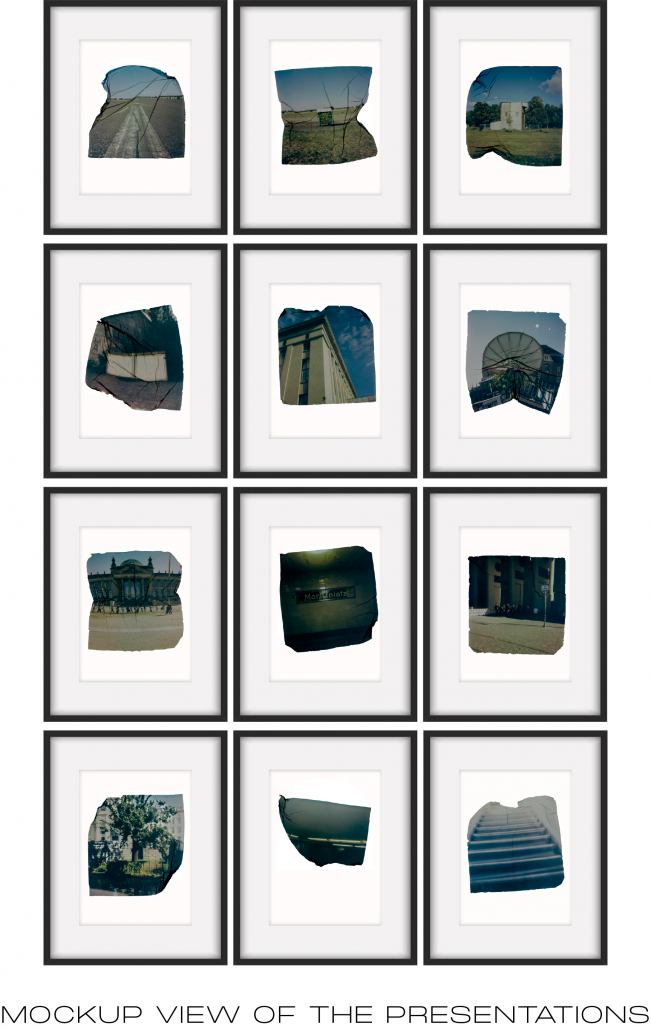
Shared Skin, 2025
Polaroid emulsion lift on archival paper,
each 21 × 14,8 cm,
presented as a composition of 12 works,
80 x 60 cm
unique works
Farzin Foroutan: „In the Shared Skin project, I lift the thin emulsion from Polaroid photographs, let it float and apply it to a new substrate. Water, gravity and my hands leave wrinkles, shrinkage and small tears. These are not flaws, but the language of the work. They mark the friction between private memory and public systems. The images look at civil structures – paths, barriers, thresholds, places of authority – that determine who can move, wait, gather, or be seen. By removing the image from its original substrate, the photograph undergoes a small migration. It behaves like a body in transit: delicate yet persistent, never quite at rest. Each fold records a touch, each repair suggests care. My life has crossed boundaries, and this history is reflected in the materials. This series transforms this experience into form. It asks: Who is allowed to appear? Who is kept smooth? What kinds of repairs can last when both people and images easily leave traces?” Since Polaroids do not have negatives, each piece is unique. The work is direct in its form and open in its meaning – a compact statement about visibility, displacement and belonging.
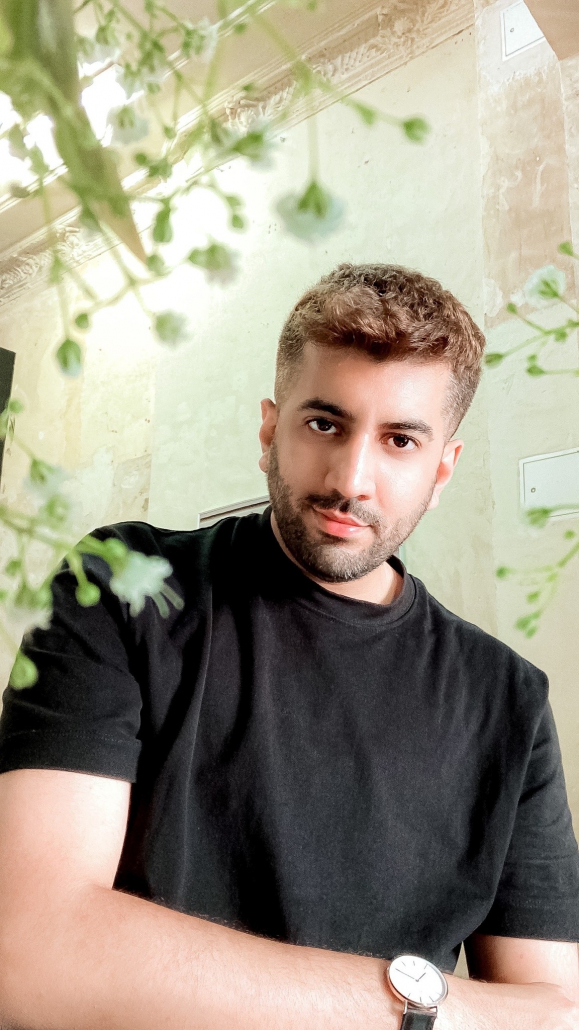
Farzin Foroutan (*1992 in Mashhad, Iran) is an Iranian artist specializing in photography and visual arts. He endeavors to capture the essence of the world around him, exploring his connection with society and the environment with utmost sensitivity. His creative journey is rooted in his immediate surroundings, memories, and personal perceptions, serving as his constant inspiration and starting point for artistic expression. Farzin Foroutan lives and works in Berlin.
Daniel & Geo Fuchs
‘Un-Orte’ / ‘Non-places’ – spaces of exclusion and encounter
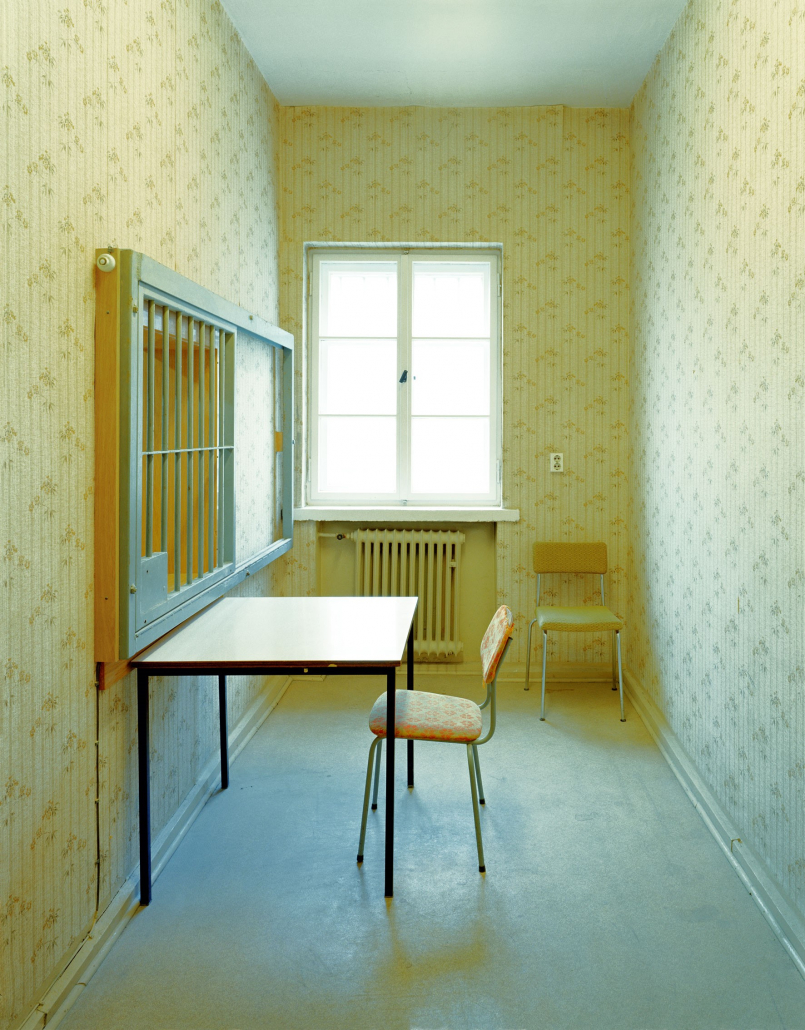
STASI – secret rooms, Hohenschönhausen –
First Hearing, 2004
C-Print, Alu-Dibond, beech wood frame
80 x 62,5 cm / framed 88 x 70,5 cm
Edition: 5/8 + 1 AP
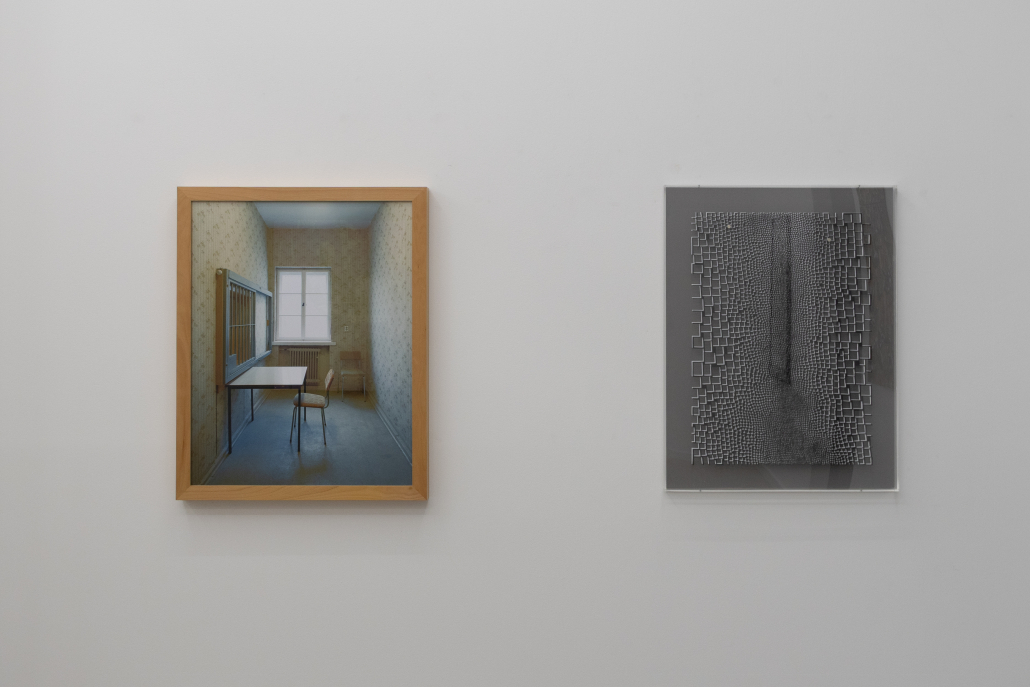
Fifteen years after the fall of the Berlin Wall, the artists travelled through eastern Germany to track down the visible remains of the STASI. They discovered former STASI premises – places that are still in use, mostly for new purposes, places that are still intact and preserved as memorials to injustice – some of which have just been closed and seem as if time has stood still. The two visited the remand prisons in Potsdam and Hohenschönhausen, the archives of the Gauck/Birthler Authority, the office of Erich Mielke – head of the Ministry for State Security from 1957 to 1989 – the Stasi bunker in Leipzig, the only Stasi prison in Bautzen, the border crossing in Marienborn and other places. The interrogation rooms and floors with their often Kafkaesque atmosphere, symbols of this former institution of oppression and injustice, the design of terror with floral wallpaper and padded doors, thoughtful arrangements of humiliation, where prisoners were even prescribed the position in which they had to sleep. The goal of the GDR government was to ensure that any kind of opposition, any preparation to flee the country, any action that would demonstrate disagreement with the official view, was detected early and suppressed.
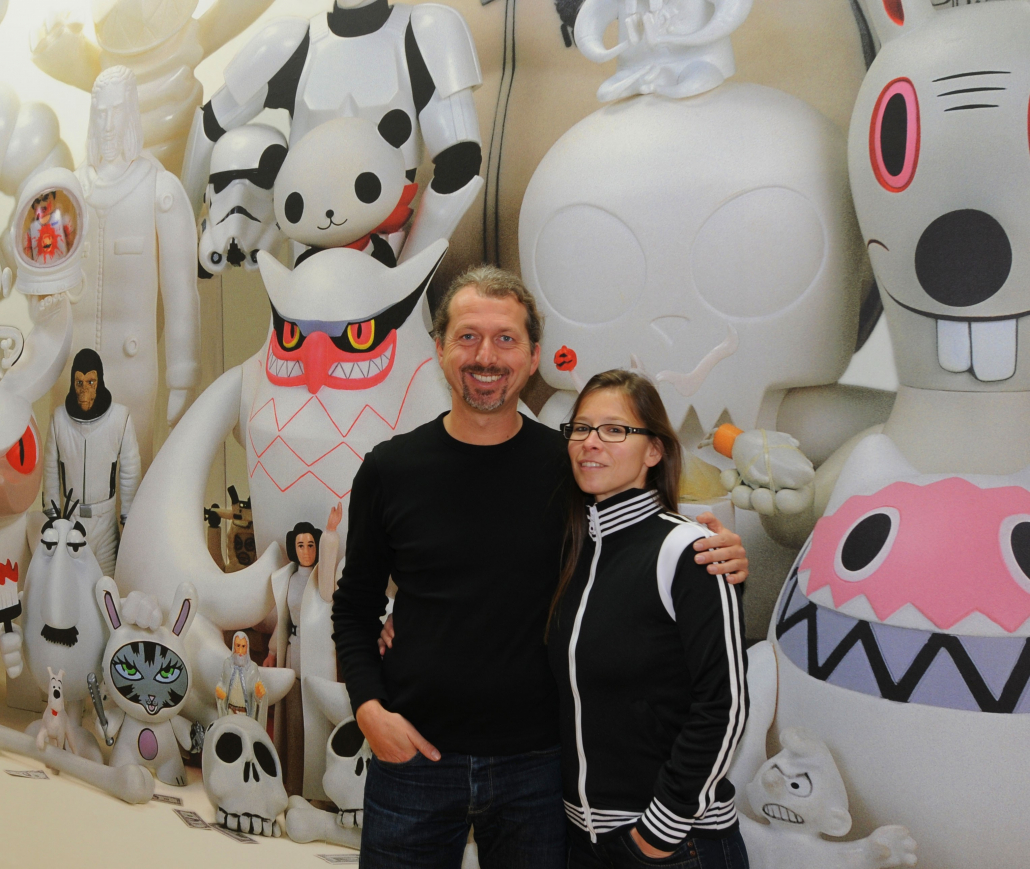
Daniel (*1966 in Alzenau, Germany) and Geo (*1969 in Frankfurt/M., Germany) Fuchs are a German artist couple who have been working together for over 20 years on conceptual photography series as well as video works and installations, which have earned them an international reputation. Their works have been shown in many international solo and group exhibitions and art fairs, among others at photo basel 2024, and can be found in private and public collections. Daniel & Geo live and work in Germany.
Birgit Naomi Glatzel
‘Un-Orte’ / ‘Non-places’ – spaces of exclusion and encounter
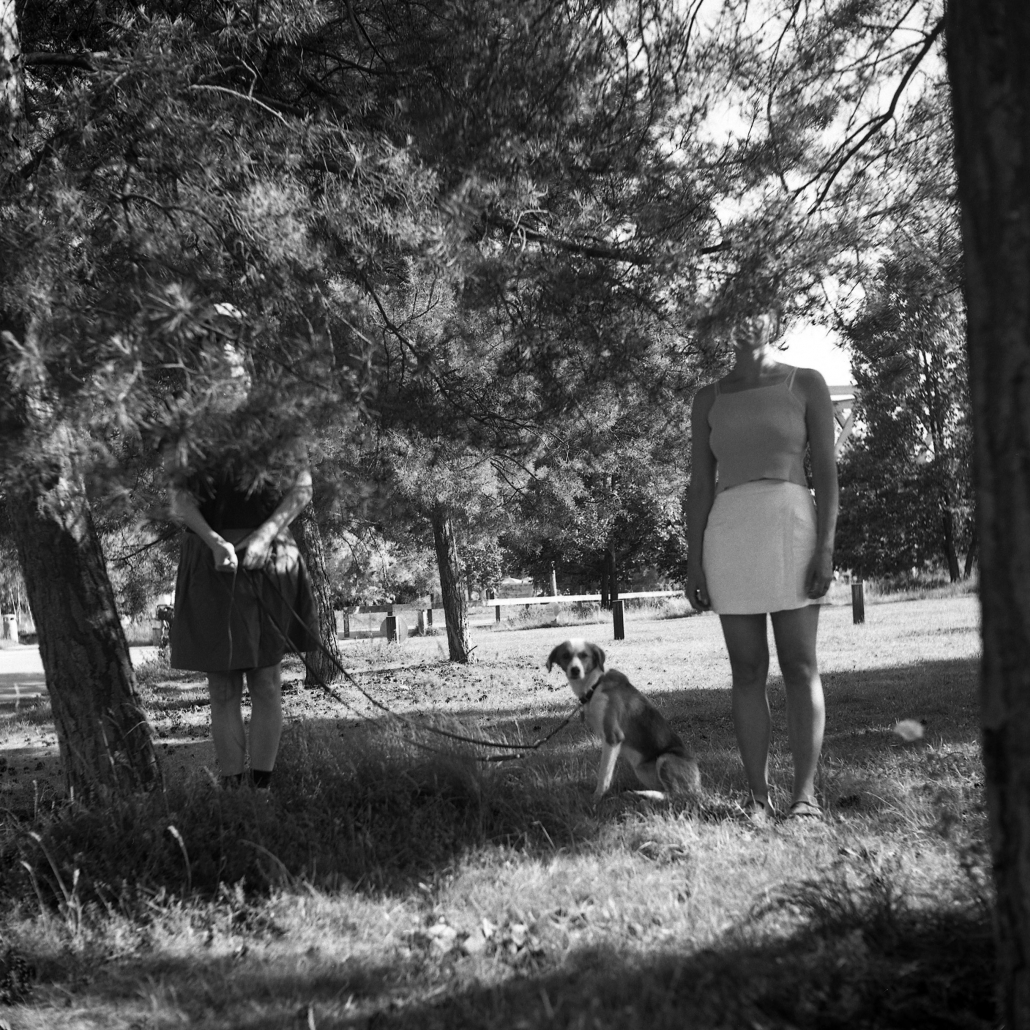
Christiane and me, 2025
Analogue black and white photography, medium format,
Fine Art Print on matte paper, 100 x 70 cm
Edition: 1/2 + 2 AP
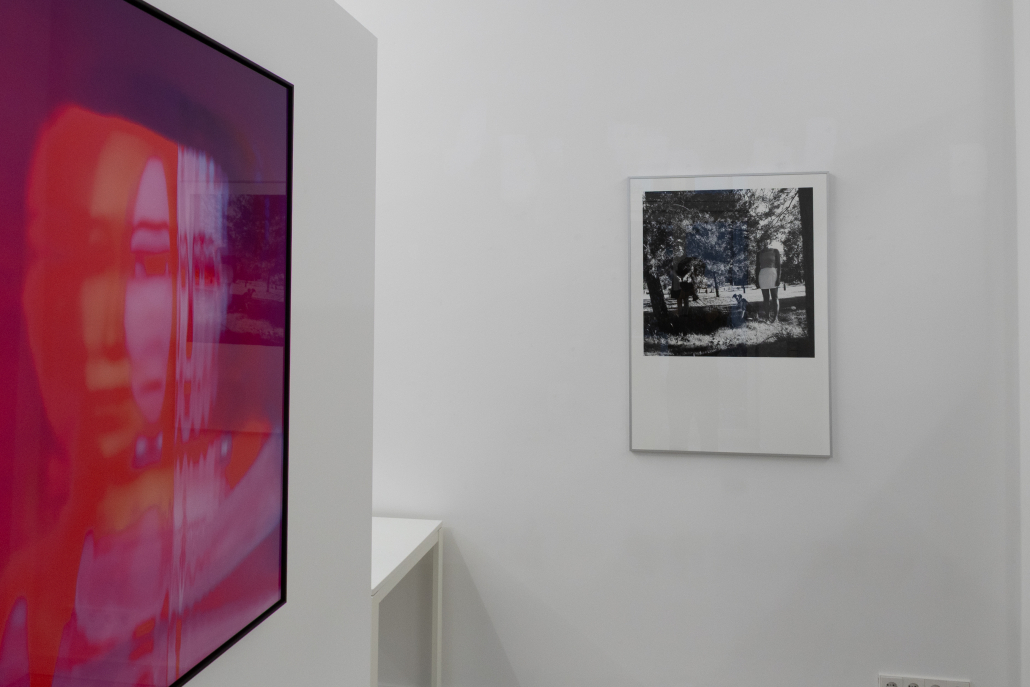
The work is part of the photo project ‘You and me’, which Birgit Naomi Glatzel began in 2007, shortly before she moved to Israel for several years. She wanted to create an image that would preserve her friendships in Berlin – a joint portrait rather than a mere self-portrait. Over the years, this developed into an ongoing series, with each photograph taken using a 1938 Rolleiflex and a ten-metre-long cable release. The photograph ‘Christiane and me’ was taken in the summer of 2025 in Berlin’s Park am Gleisdreieck. The artist met Christiane two years earlier at the office, and both were affected by the stressful atmosphere of their working environment. Christiane supported her in difficult moments, but insomnia and pressure eventually forced the artist to resign. Christiane had had similar experiences. When they planned the photo, they agreed to hide themselves – as a symbol of their vulnerability and their shared process of healing. The chosen location, surrounded by trees, became a quiet sanctuary. For Birgit Naomi Glatzel, photography is often an inner means of expression to process challenging situations – an attempt to transform trauma into connection, or, as she says, ‘horizontal – vertical’.
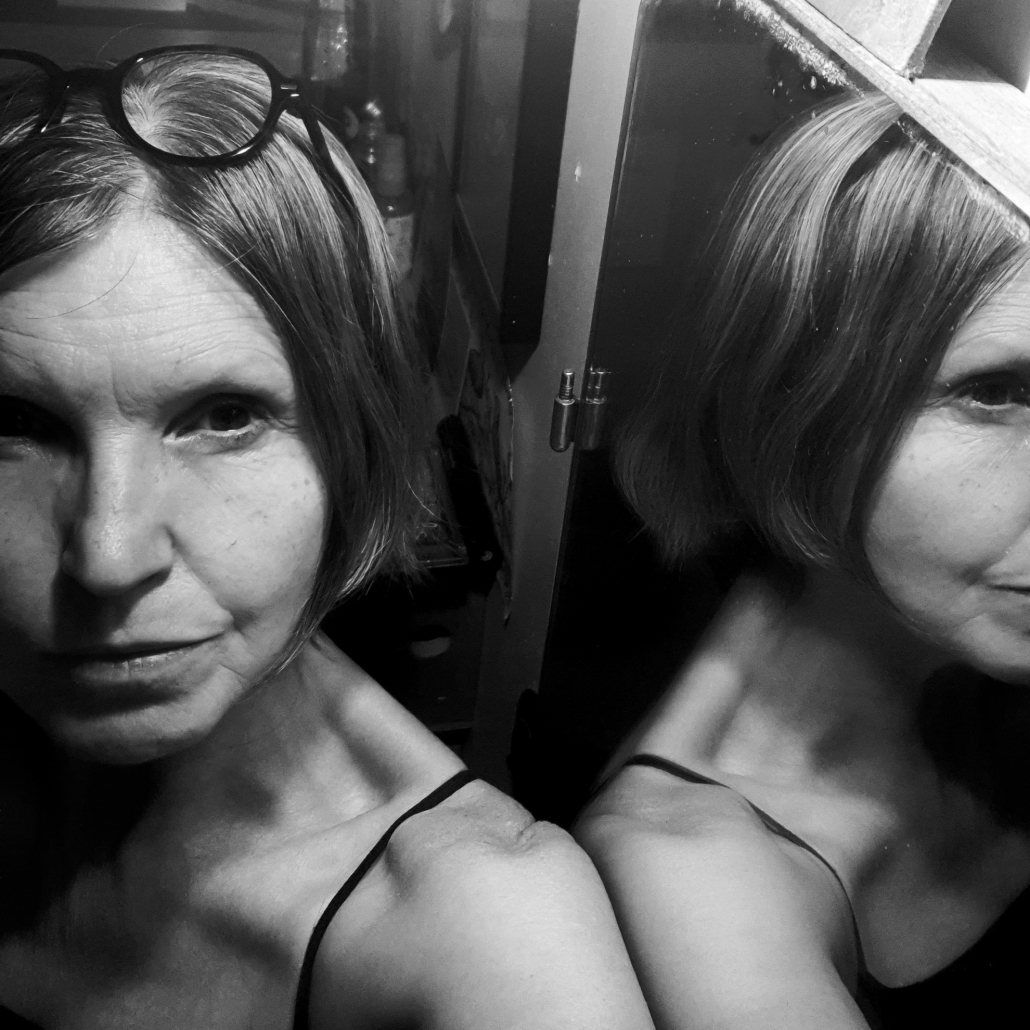
Birgit Naomi Glatzel (*1970 in Kempten/Allgäu, Germany) is a freelance conceptual artist and architect. She has worked mainly in the field of photography since 1998. She began her photo project ‘a friend is a friend of a friend’ in the summer of 1998 and has attracted international attention. Among others her works have been shown at the Tirana Biennale, the Venice Biennale, in Berlin (including at the Jewish Museum), Jerusalem, Paris, Kiev and at Photo London 2024. Birgit Glatzel lives and works in Berlin.
Dale Grant
‘Trotz’ / ‘Defiance’ – resistance, beauty, hope

Marcelo, 2023
Fine Art Print on AluDibond, 100 x 75 cm
Edition: 1/3 + 1 AP
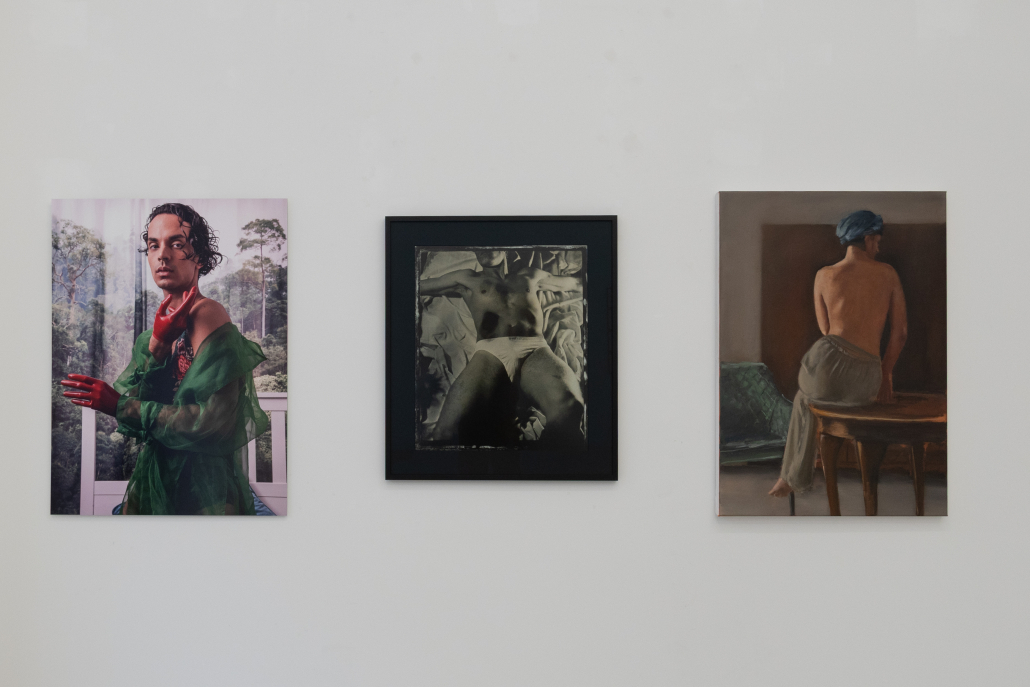
In this portrait of Brazilian performance artist Marcelo, defiance takes shape not through confrontation, but through grace, beauty and an unwavering presence. Enveloped in translucent green fabric and standing before a lush, dreamlike backdrop, Marcelo exudes a quiet power that is both delicate and unbreakable. The bright red gloves become a symbol of resistance – affirming individuality and demanding space in a world that often demands conformity. There is no trace of victimhood here. Instead, the portrait speaks of quiet perseverance and artistic self-empowerment. Marcelo’s gaze is calm, neither pleading nor apologetic, but a complex mixture of vulnerability, humour and resilience. The work celebrates queerness not as a marginal phenomenon, but as a radiant and vital force that demands the right to beauty, complexity and hope. We live in a time when expressing one’s authentic self – especially within the queer and trans communities – is politicised and provokes hatred and unfounded fears. Yet in the face of this hostility, there is extraordinary strength. Every act of self-expression, every insistence on being truly seen and named, becomes a form of quiet resistance. Dale Grant sees this portrait as an extension of his floral portraits. Fragile yet resilient, they bloom despite all the forces that could destroy or wither them. In the same way, queer and transgender people continue to flourish in a world that often refuses to support them, embodying a defiant grace that transforms vulnerability into strength.
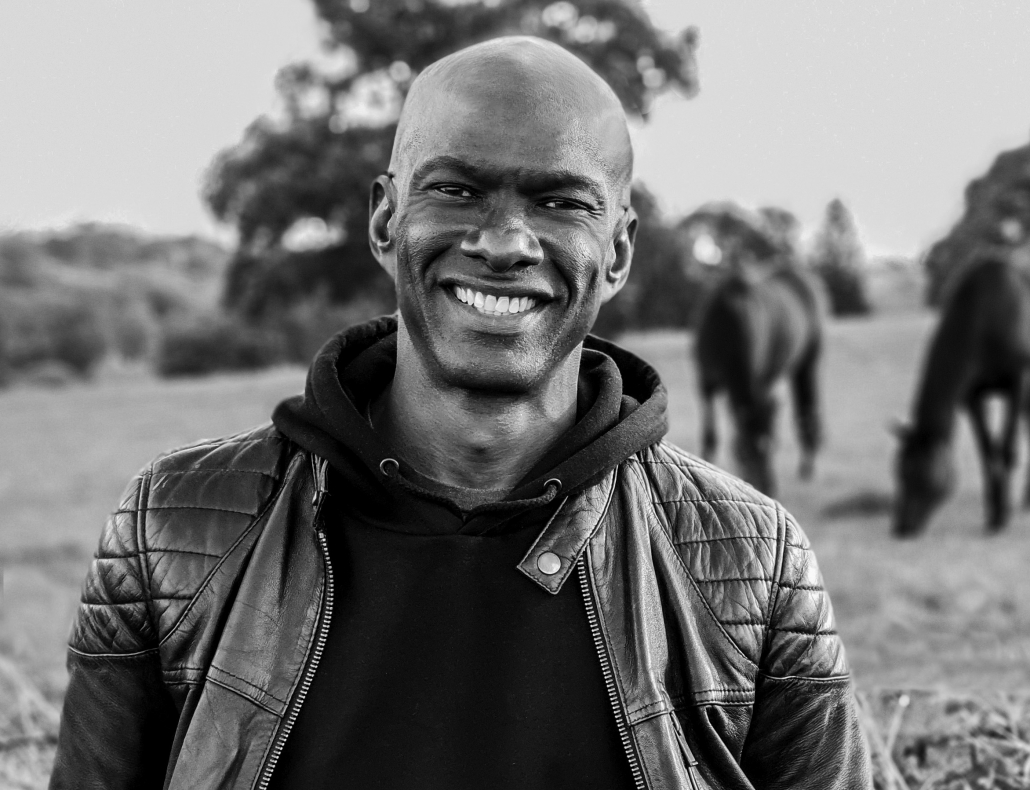
Dale Grant (*in Nassau, Bahamas) followed his heart after graduating from university with a degree in International Relations and became a photographer specialising in fashion and portrait photography. After working as a commercial photographer for many years, he turned to fine art photography. Flowers are now his favourite models, which for him are an allegory for life. His works can be found in many art collections and he lives in Berlin and Rotterdam.
Deni Horvatić
‘Trotz’ / ‘Defiance’ – resistance, beauty, hope

Doubting Thomas, 2025
Wet plate collodion, scanned and printed on fine art paper, 64 x 54 cm
Edition: 1/10 + 1 AP
Deni Horvatić’s newest project represents a shift toward a slow, meditative practice. Historically, wet plate photography was central to documenting war and expansion, while queer bodies remained largely absent from its visual archive. In the exhibited work, a portion of the plate failed to develop, creating a void that recalls the wound in Caravaggio’s The Incredulity of Saint Thomas. The absence of the second figure shifts the act of verification onto the viewer, transforming the flaw into a site of doubt and interpretive participation. At a moment when AI-generated imagery increasingly blurs the boundaries of reality, historical photographic processes can often appear artificial or digitally manipulated. This black void, however, insists on its material truth, it asks viewers to place their fingers inside if they do not believe what they see. By centering the queer body within a medium once used for exclusion, the artist’s practice reclaims this history, expanding and bending our collective horizon toward a space of dignity, complexity, and individuality.
Deni Horvatić (*1991 in Čakovec, Croatia) is an artist specializing in photography, video art, and CGI. Winner of the Marina Viculin Award for outstanding achievements in Croatian photography, his work was exhibited at Miroslav Kraljevic Gallery (2020) and the 36th Youth Salon (2022). His series SCAN featured at nüüd.berlin gallery, UNSEEN Amsterdam 2023, Rovinj Photodays and photo basel 2024. The artist lives and works in Čakovec, Croatia.
Ivar Kaasik
‘Un-Orte’ / ‘Non-places’ – spaces of exclusion and encounter
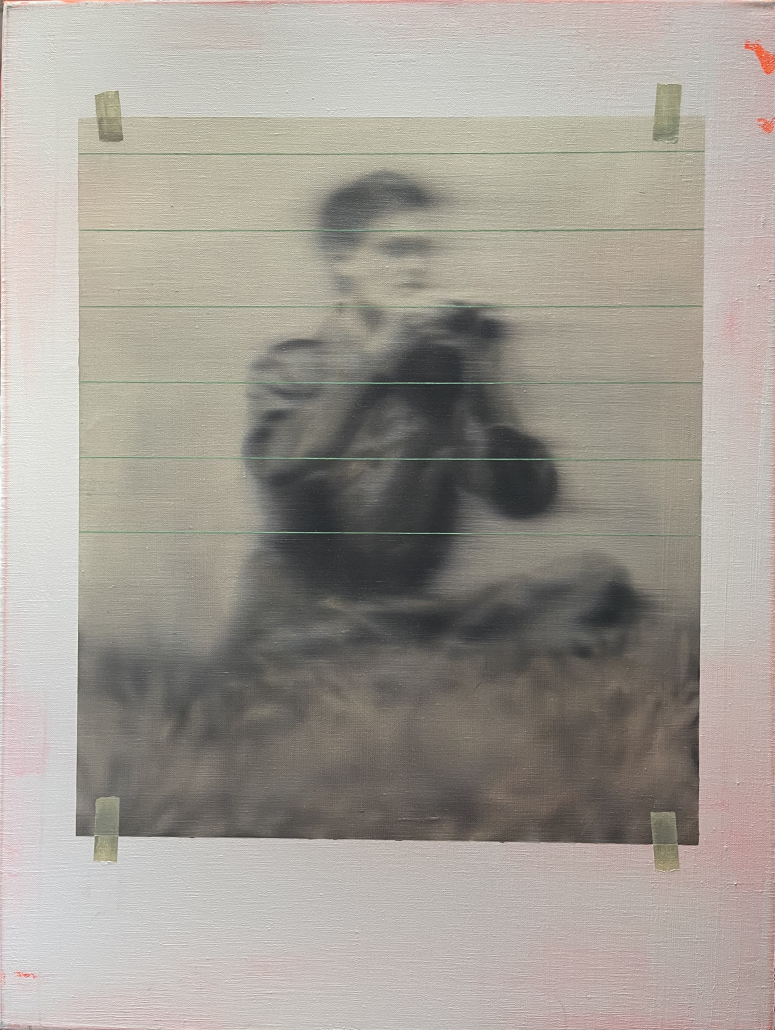
Horizons, 2024
Oil on canvas, 80 x 60 cm
war
border
borderline
refugee
danger
observe
horizons
parallel worlds
At first glance, it is clear that a blurred black-and-white photograph has been stuck onto another image. In the photograph, a young man is sitting on a hill, watching something intently. On closer inspection, you can see parallel, sharp, thin lines that are missing from the lower part. Much remains unclear and questionable to us. Not everything is as it seems.
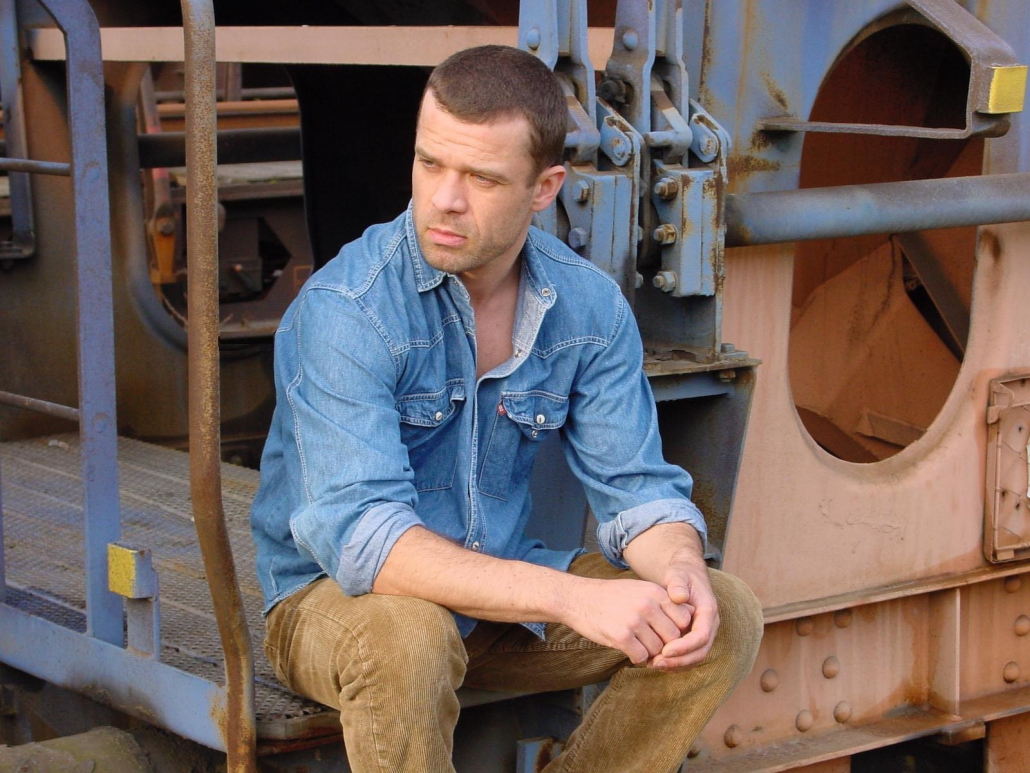
Ivar Kaasik (*1965 in Kuressaare, Estonia) studied architecture at the Estonian Academy of Arts in Tallinn and continued his studies at the University of Art and Design in Halle/Saale. The human condition is one of the main themes of his work, whereby he does not merely remain on the surface of social orders and expectations, but dives directly into the world of the human condition. His works are shown internationally in solo and group exhibitions and hang in private and public collections. Ivar Kaasik lives and works in Berlin.
Marco Kaufmann
‘Trotz’ / ‘Defiance’ – resistance, beauty, hope
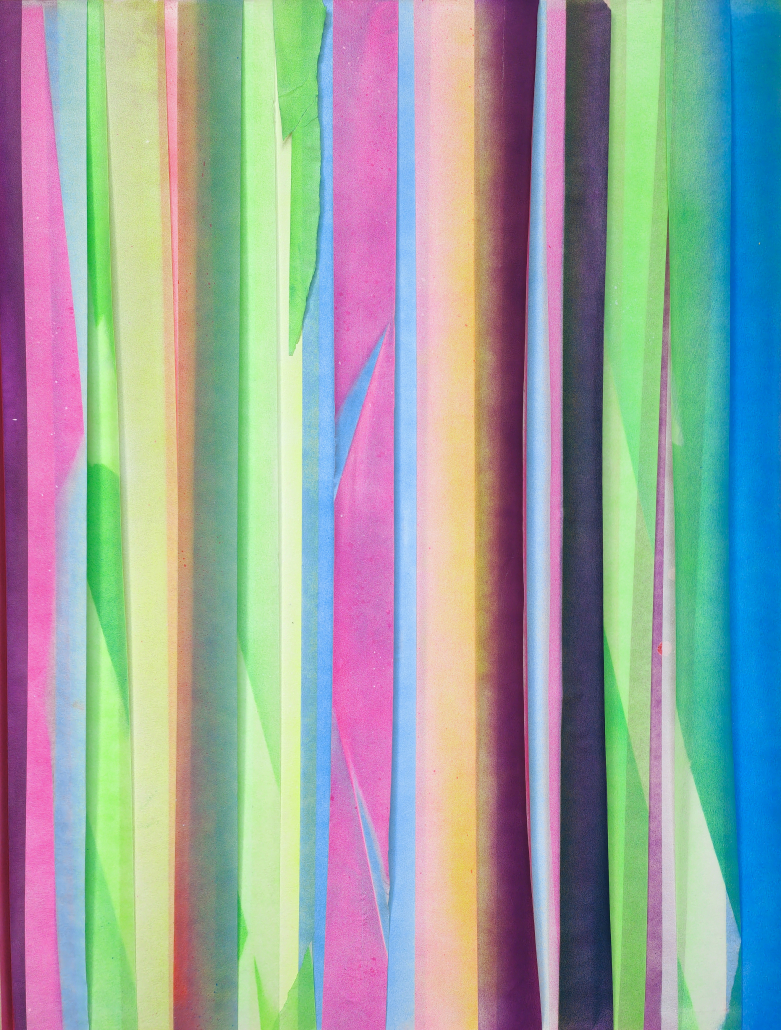
Resonanzlinien, 2025
Tape Collage, spraypaints, 80 x 60 cm
In his work ‘Resonanzlinien’ (Resonance Lines), Marco Kaufmann transforms coloured adhesive tape – an everyday, ephemeral material – into a poetic metaphor for social tension and cohesion. The vertically arranged tapes act like individuals: autonomous, varying in colour, transparency and texture, yet in constant interaction. Between them, breaks, overlaps and light reflections emerge – fragile spaces that signify both separation and connection. The artist’s collages are created through a process of laying, layering and occasional tearing: each tape bears traces of the hand, each seam tells a story of decision and chance. In times of growing polarisation, sticking becomes a gesture of healing – not as smoothing, but as visible repair. The surface remains rough, unfinished, criss-crossed by imperfections and overlaps: a commitment to the human, to the imperfect. It is precisely in the apparent simplicity of the material that a subtle resistance lies – against homogenisation, against the suppression of difference. The work conveys a quiet, insistent attitude: diversity is not a deficit, but a space of possibility. The upright lines represent physical presence and ethical determination – an attitude that does not bend, but remains touched. The artist shows colour not as a statement, but as an encounter: a delicate, persistent plea for visibility, empathy and the coexistence of different people.
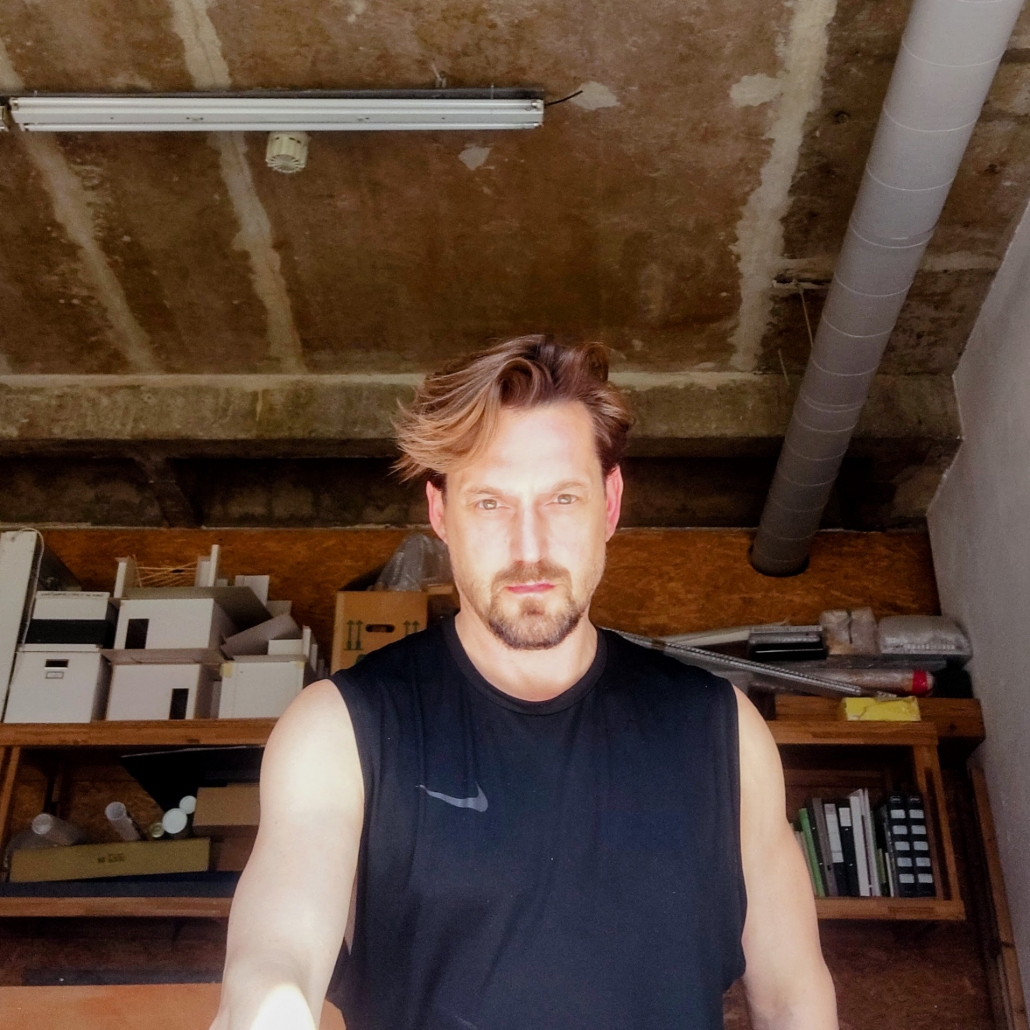
Marco Kaufmann (*1975 in Western Pomerania, Germany) graduated in fine art (painting and photography) at the Berlin-Weißensee School of Art after completing his vocational training as a graphic designer. Inspired by the city, the country, his travels and photographs, he realises his feelings and thoughts in various techniques as a subjective version of reality – he paints, casts, sprays and glues. His works have been exhibited nationally and internationally and can be found in private and public collections. Marco Kaufmann lives and works in Berlin.
Jörg Kujawa
‘Ver-Letzt’ – vulnerability, dignity and the power of acceptance
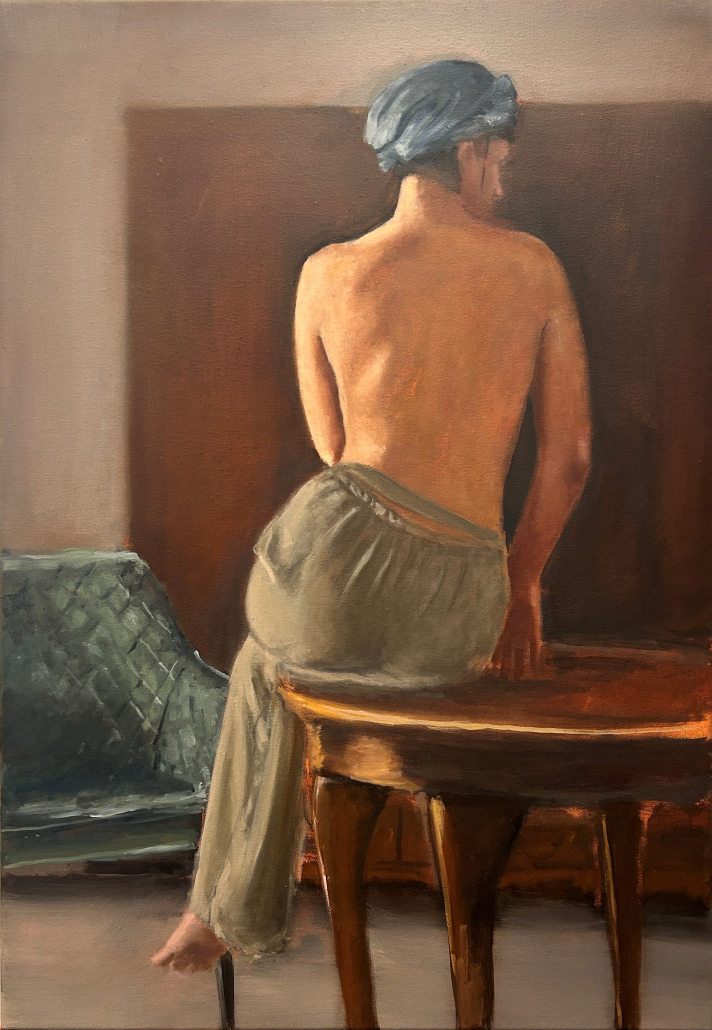
Nude, 2025
Oil on canvas, 100 x 70 cm
In his painting ‘Nude’, Jörg Kujawa interprets Ingres’ classic painting La Baigneuse Valpinçon in a contemporary way with regard to the themes of vulnerability and human integrity. He is not concerned with idealised perfection, but rather with the human being in his sensual presence. The body appears exposed, but not exposed. The aloofness creates distance without closing off the moment. Light and shadow gently model the form, creating a calm that appears both fragile and composed. It is precisely the posture – collected, upright, at peace with itself – that lends the figure a quiet grandeur. The work opens up a space between classicism and the present: the memory of Ingres remains palpable, but serves above all as a starting point for formulating a contemporary understanding of physicality, sensitivity and human self-image. At the same time, the painterly surface – the visible brushstrokes, the finely placed transitions and the texture of the oil paint – refers to the physical process of creation itself. The result is an image that not only shows, but also has an inner effect: a moment of quiet concentration, vulnerable but not defenceless, sublime and beautiful. The work focuses on a body that neither displays strength nor remains in a posture of sacrifice – an attitude that remains quiet, self-assured and deeply human. In a social climate in which many identities are under pressure, this form of dignity appears as a counterpoint to the hardening of the present.
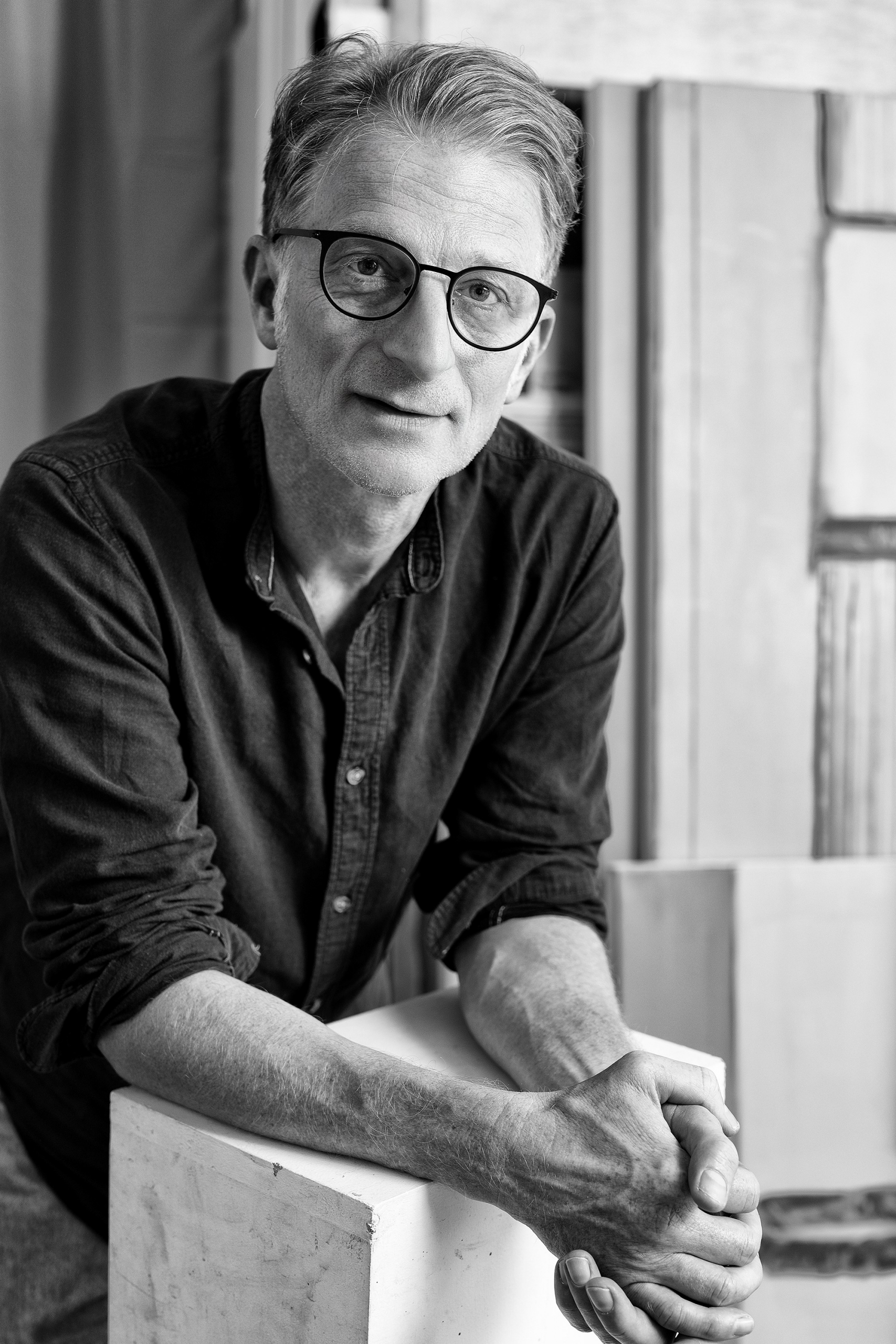
Jörg Kujawa (*1973 in Osnabrück, Germany) is a painter who studied art at the University of Osnabrück. Having been involved in painting since his youth, he has developed a visual language that oscillates between intimacy, observation and atmospheric condensation. His precise perception and strong inner sensibility give rise to works that make an impact through their haptic, physical presence. Photographic sketches serve as his starting point; the decisive factor is the translation of what he perceives into the sensual materiality of paint. The artist has received several awards, including the Piepenbrock Art Promotion Prize. His works have been exhibited in Germany and Paris and are held in private and public collections. He lives and works in Osnabrück.
Miguel Mas
‘Trotz’ / ‘Defiance’ – resistance, beauty, hope
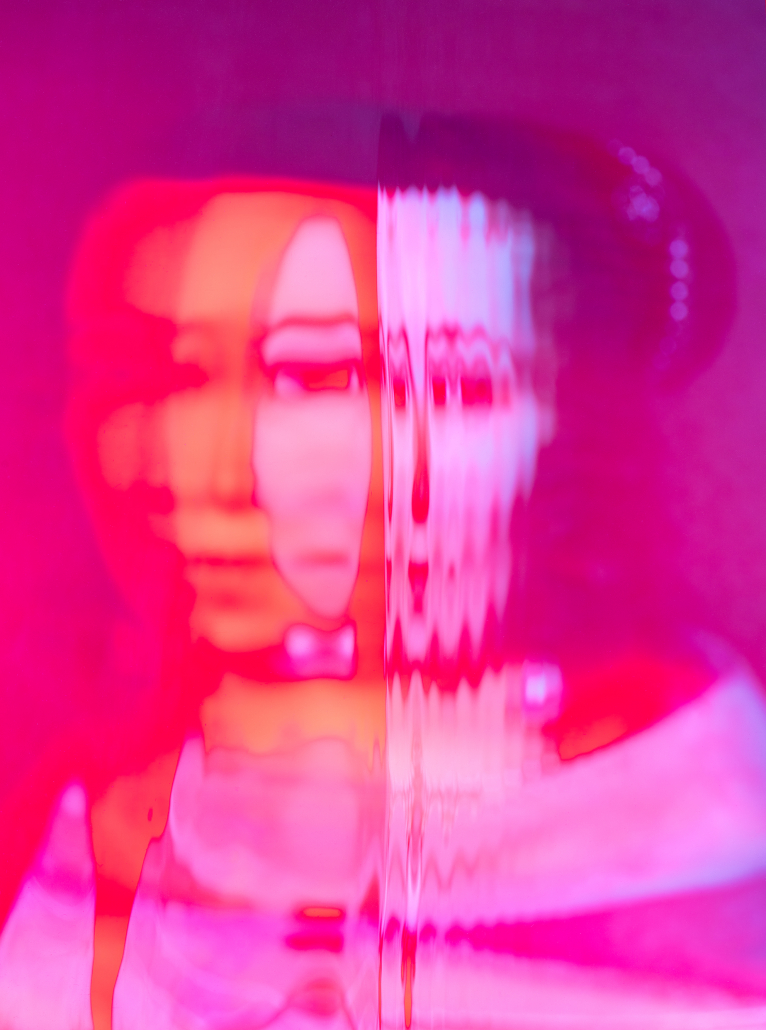
Drowned Dreams, Maria Sybilla Merian (1647-1717), 2024
ChromaLux HD, metall print in wooden frame, 93,3 x 70 cm
Edition: 2/3 + 1 AP
The work is part of the series ‘Drowned Dreams,’ which looks back on the lives of female scientists from the 16th to the 19th century – women who made important contributions to knowledge but were often excluded from official historiography. These images bring their stories back to light, revealing both their strength and the silence that surrounded them. Water plays a central role in this work. It moves across the photograph, breaking and distorting the image, much like time changes our memories. The flowing surface speaks of oblivion, of the passing of years and the many identities these women carried – scientists, mothers, daughters, dreamers. Each distortion invites us to see them in a new way, as if different versions of their lives were rising through the water and disappearing again. This work becomes both a tribute and a reflection. It reminds us that what disappears is not always lost, and that perseverance – in science, in art, or in life – can outlast time itself. Through these broken reflections, the series gives a new voice to those who once had none, keeping their legacy alive in motion and light.
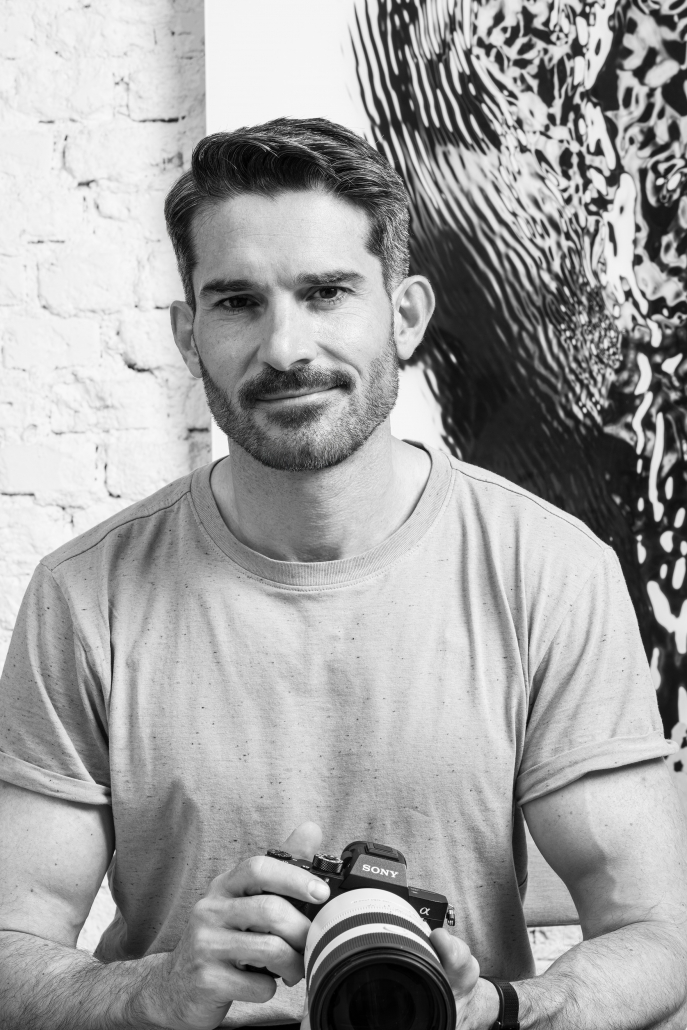
Miguel Mas (*1981 in Madrid, Spain) is a photographer and trained biologist. He worked in the field of microbiology for over ten years before combining his scientific perspective with his passion for art and studying photography at the renowned EFTI school in Madrid. In his work, he explores the interplay between science and aesthetics: liquids become metaphors for the flow of life, distorting or shaping elements of an altered reality. His photographs are vivid, fleeting and unique – optical illusions that show that nothing is as it seems. His work has been exhibited internationally and is included in international collections. He lives and works in Madrid.
Georg Meyer-Wiel
‘Ver-Letzt’ – vulnerability, dignity and the power of acceptance
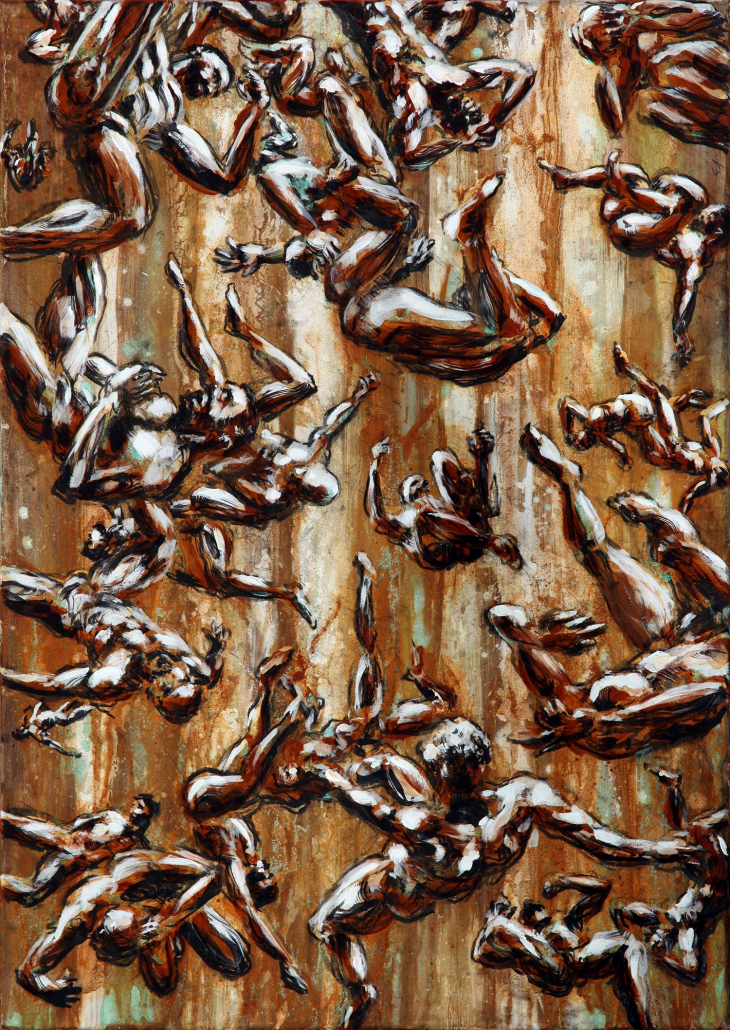
Free Fall I / II, 2025
Acrylic, charcoal, corroded iron and copper on natural linen,
each 100 x 70cm
For the artist, VERTICAL HORIZONS signifies instability. Over the past few months, he has been intensively exploring the theme of instability and studying the posture of falling bodies. The helplessness and vulnerability of bodies in free fall represent both the suffering and loss of dignity of individuals and the decline of diversity in many political systems. He thus addresses the rise of authoritarianism and the disintegration of liberal certainties. The falling bodies in the artist’s paintings are naked and unprotected. Many of the poses are still images from videos in which he filmed himself falling. These case studies place him at the centre of the work – for his dignity, rights and identity as a gay man are also not secure. An important component of the media used in the painting created for this exhibition is corroded metal, as this addresses attack, injury and fragility on a material level, as well as the acceptance of transience and imperfection.

Georg Meyer-Wiel (*1973 in Velbert, Germany) is an interdisciplinary artist whose work encompasses painting, drawing and stage design. Inspired by nature and movement, his works are created as physical and emotional responses to the world around him. After studying communication design with a focus on drawing and photography at the Folkwang University of the Arts, he received a scholarship to the Royal College of Art in London, where he completed his master’s degree in fashion design. Today, he works as an artist and stage designer for international dance and opera productions. His works have been exhibited worldwide, including at the Kunstmuseum Bonn, in London, Berlin, Sydney and New York. Georg Meyer-Wiel lives and works in London.
Jan Prengel
‘Ver-Letzt’ – vulnerability, dignity and the power of acceptance
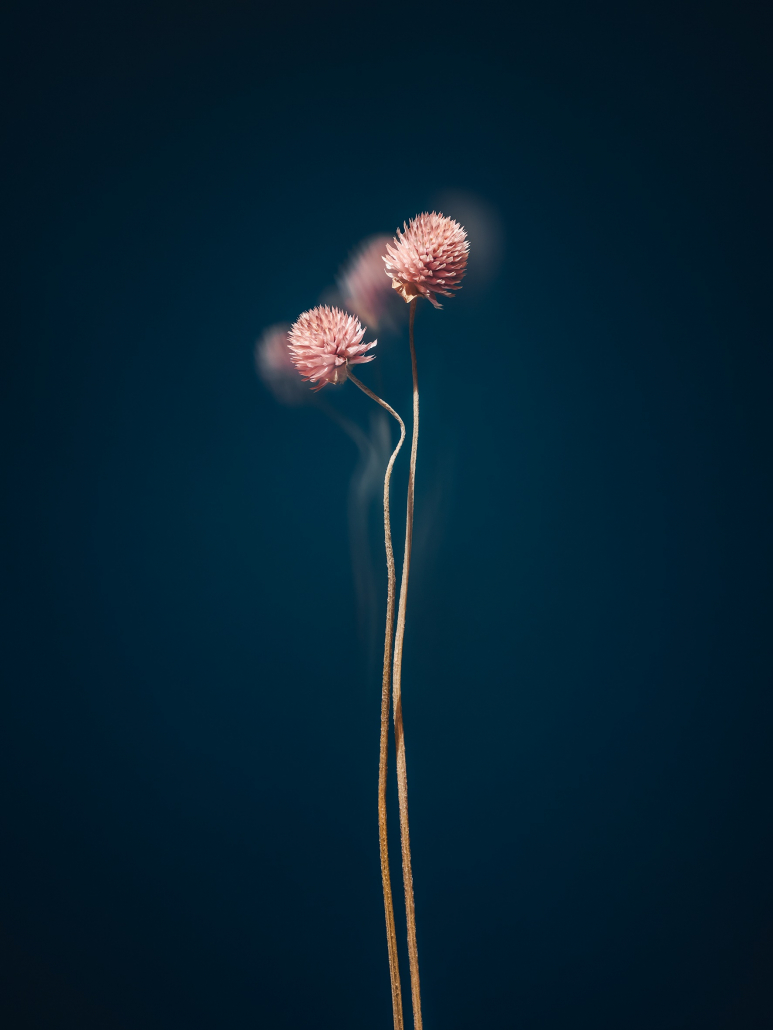
Inherited Gaze 4, 2023
Archival Pigment Print on Hahnemühle Photo Rag Pearl,
white border around the edge,
tulipwood frame in white,
100 x 75 cm / framed 113 x 88 cm
Edition 1/3 + 2 AP
In the series ‘Inherited Gaze’, the artist explores the inheritance of mindsets,unresolved traumas, and personal traits. These can be passed down through manygenerations, shaping the character of subsequent generations and influencing theirview of the world. For ‘Inherited Gaze’, he photographed the recurring motif of driedplants in his work through his parents’ old glasses. Looking through these glassessymbolizes the inherited parental characteristics that shape one’s perception – like a filter that cannot be removed. It remains open whether this view is negativelyblurred or can be understood as the source of an interesting perspective. Becoming aware of inherited inner conflicts, emotions, and traumas, confronting them, and transforming them into something unique and meaningful reflects both vulnerability and the ability to deal with it in a powerful and resilient way. Since most people are affected by mental health issues in one way or another, yet the social significance and handling of these issues remain very limited, more openness on this subject could lead to greater empathy, tolerance, and respect in our interactions with each other. The exhibition ‘Vertical Horizons’ is a statement in support of these values and an invitation to break down physical and mental walls and barriers.
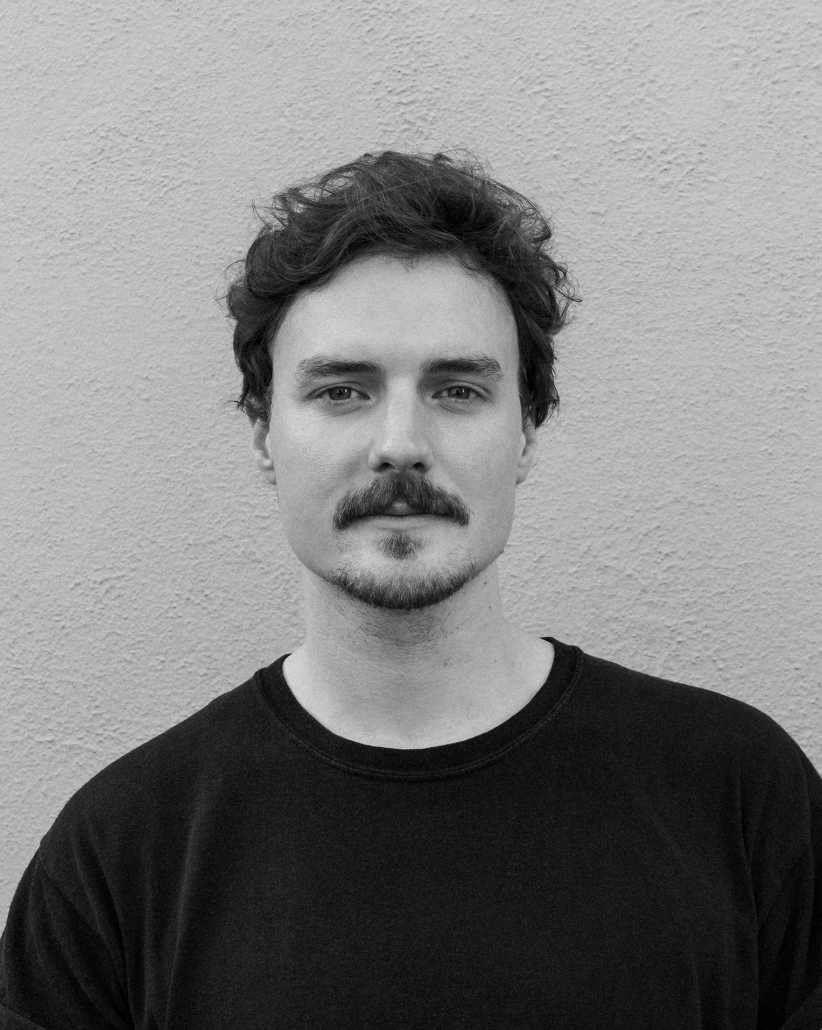
Jan Prengel (*1992 in Ulm, Germany) uses his minimalist photographs to explore the deeper dimensions of time, space, and perception, conveying his personal view of the world. Where language and explanation reach their limits, his works encourage viewers to move beyond a purely material understanding of reality and discover new perspectives. His motifs range from plants to urban spaces. The minimalism in his works not only serves visual aesthetics but also unfolds a calming, contemplative effect. Harmonious compositions form the basis of each piece, inviting viewers to pause, reflect, and explore their own inner images and visions. Jan Prengel studied photography in Esslingen. His works have been exhibited and awarded internationally, and he is represented by galleries in Europe and the United States. He currently lives and works in Germany.
Omri Emile Rosengart
‘Trotz’ / ‘Defiance’ – resistance, beauty, hope
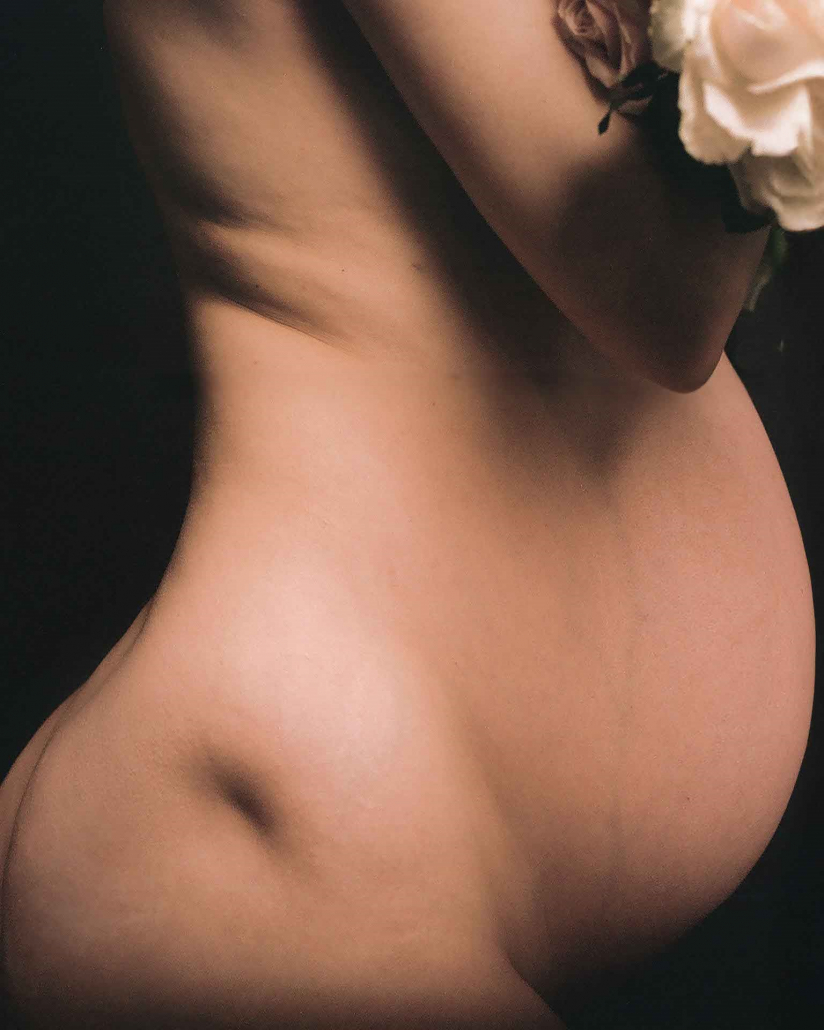
Ella, 2024,
Film photography,
Print on Hahnemühle Photo Rag 308 g Papier,
80 x 61 cm, framed 98 x 79 cm
Edition: 1/5 + 1 AP
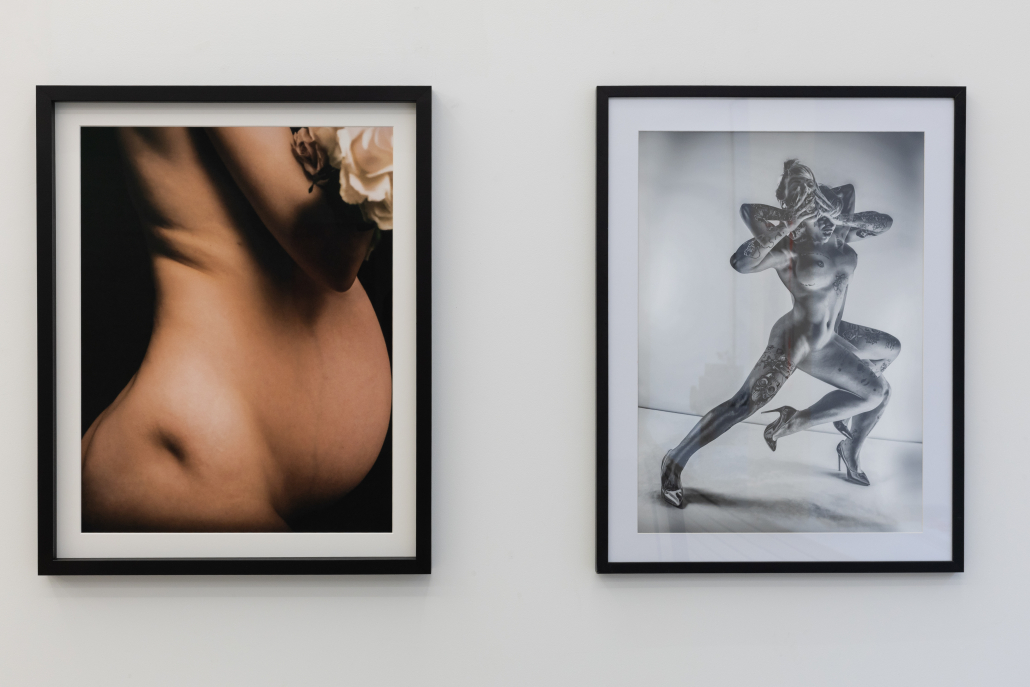
Omri Emile Rosengart’s work embodies quiet rebellion through its sculptural representation of the human body. His depiction of a pregnant woman in profile evokes the serenity of an Old Master painting, in which light and shadow shape emotions with timeless restraint. Stripped of identity and perfection, it reveals strength through vulnerability. The faceless form resists the gaze that seeks to define or idealise, inviting us to look beyond judgement. The artist, who has a background in fashion photography, subverts its traditional aesthetics and transforms it into a language of truth and inclusion. Abstract in its stillness, the image transforms raw intimacy into a symbol of endurance and self-empowerment. A subtle flower appears as a quiet motif of renewal and femininity. By celebrating the unfiltered body as art – and offering resistance not through confrontation but through grace and authenticity – the work highlights the beauty of the natural female body: unpolished, unretouched, and unapologetically real, challenging the perfectionism long dictated by fashion imagery. Omri Rosengart is represented by Bright Gallery, Tel Aviv, which represents emerging fashion photographers from around the world. With new aesthetics and narratives that convey both concept and attitude, the gallery’s artists explore themes such as identity, community and material culture. Bright Gallery honours photographers who shape their own visions while reflecting the aesthetics of the cultural environment in which they flourish.
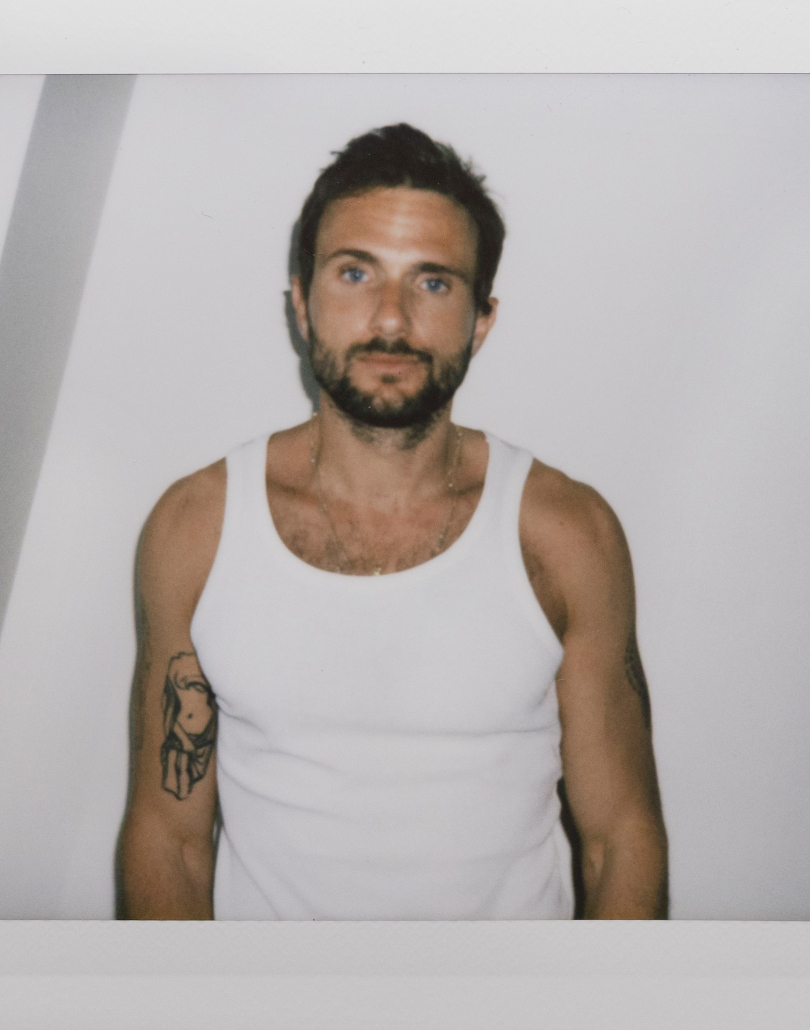
Omri Emile Rosengart (*1989 in Paris, France) is a photographer who grew up in Tel Aviv and now lives in Paris again. He completed a Master’s degree in Fashion, Film & Photography at the Paris College of Art, where he also teaches. His work moves between advertising, fashion and art. He has photographed for Stella McCartney, Dior Boutique, L’Occitane and Numéro Netherlands, among others. In 2025, Rosengart presented his first solo exhibition with the Bright Gallery at Photo London, which was later shown in Paris. His works combine aesthetics and narrative, inspired by old masters and contemporary art.
Richard Schemmerer
‘Trotz’ / ‘Defiance’ – resistance, beauty, hope
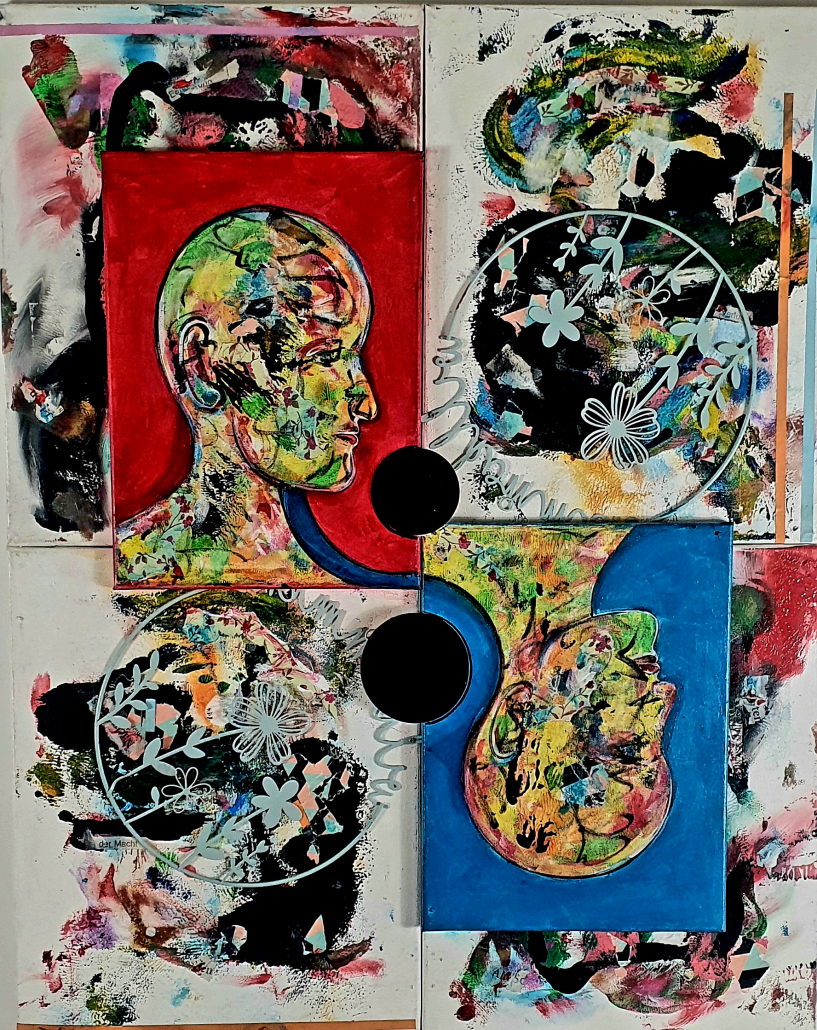
RRR, 2025
Acrylic paint, wood, metal, paper,
Collage and marker on canvas,
100 x 80 cm
The work RRR (Remember Recall Rebirth) addresses resistance to hatred: we should stand up for one another in love in order to recognise that we all long for the same things. Sometimes we are misguided, but beneath the duality of good and evil lie hope and forgiveness. This is unity in equality and the gift and truth of interdependence. We must not only stand up for the rights of all, but also learn to play together again and bridge the gaps of separation. We must see the inner child in ourselves that longs for love, belonging and security. We can achieve this if we stand united – not against something, but for a vision of the future. We must come together to find the solutions necessary to ensure both our personal existence and our coexistence.
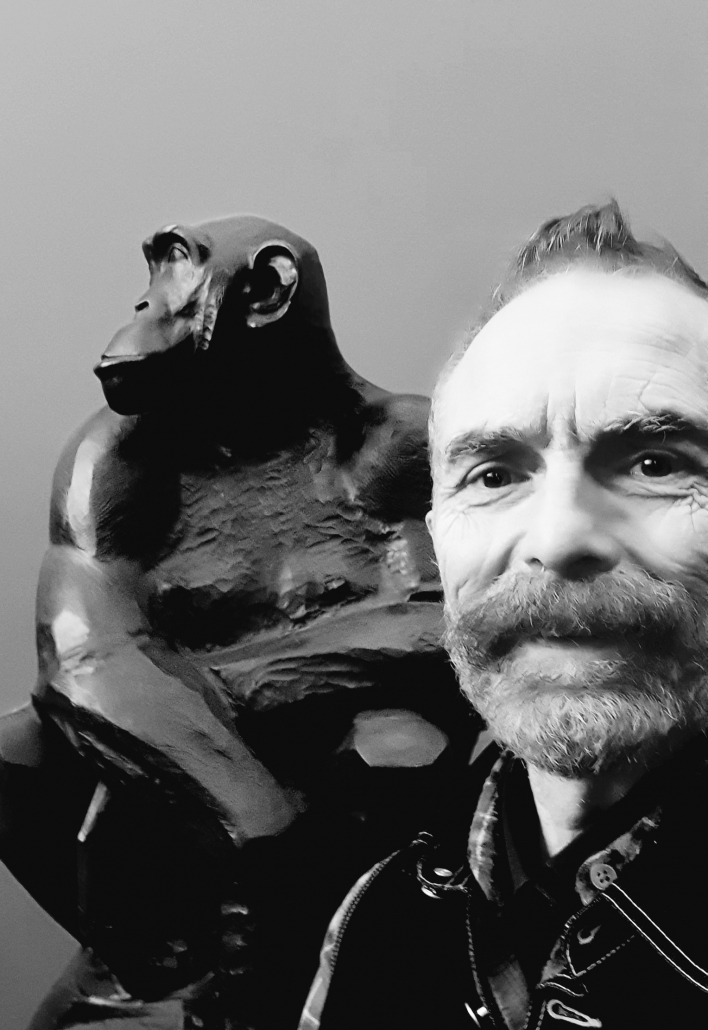
Richard Schemmerer (*1957 in Munich, Germany) is a professional artist with a background in fashion. He lived in the United States for many years, was part of various art scenes, and has exhibited extensively. He is also a poet and writer, filmmaker, life coach, and creative teacher. His mission is to ensure that art is always valued as a language, regardless of the era in which we live, our tastes, and the time frame imposed on us by the socio-political climate. Richard Schemmerer lives and works in Berlin.
Violetta Elisa Seliger
‘Ver-Letzt’ – on vulnerability, dignity and the power of acceptance
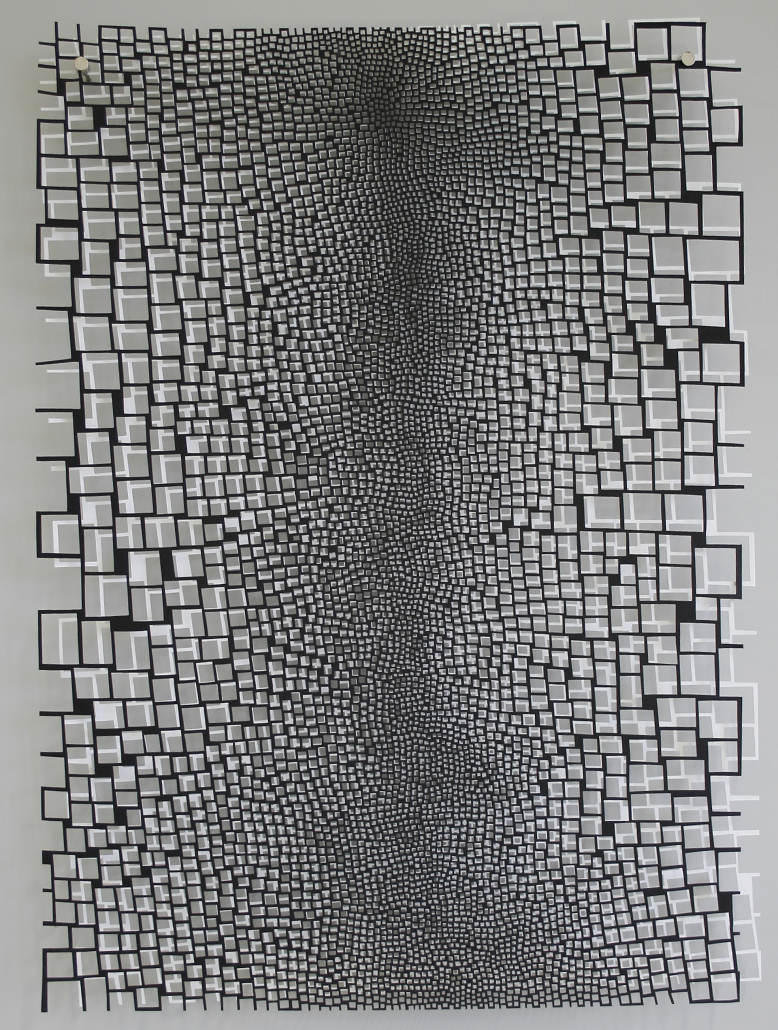
Untitled, 2025
Paper cut, 2 layers,
85 x 65 x 5 cm
In her works, Violetta Elisa Seliger combines hand-cut grid structures made of paper to create relief-like image collages – in search of the greatest possible balance and harmony between opposites. The individual layers are hung at different distances from each other to create a spatial effect. All works have in common that they work through the combination of black-and-white contrasts and multiple layers (through sequences, overlays and condensations). The work processes in which the paper cuts are created are essential retreats for the artist, especially in these turbulent times. They give her the opportunity to perceive different levels of thoughts and feelings, where thoughts can condense and dissolve again. The grid-like structures emerge intuitively. For the exhibition, the artist has selected a work consisting of two paper cuts layered one in front of the other, one white and one black, which can be seen as symbols of all kinds of opposites (e.g. opinions, identities, etc.). The contrasts meet here and enter into a relationship with each other. The individual grid structures become denser in the centre and dissolve again towards the outside. This effect is reinforced by the two levels and the different distances between them. In a figurative sense, this creates a space between the two layers in which a dialogue takes place. In the centre, the paper cuts have their greatest point of contact and their greatest density – possibly an indication of the strength of the connection and, at the same time, the most vulnerable point?
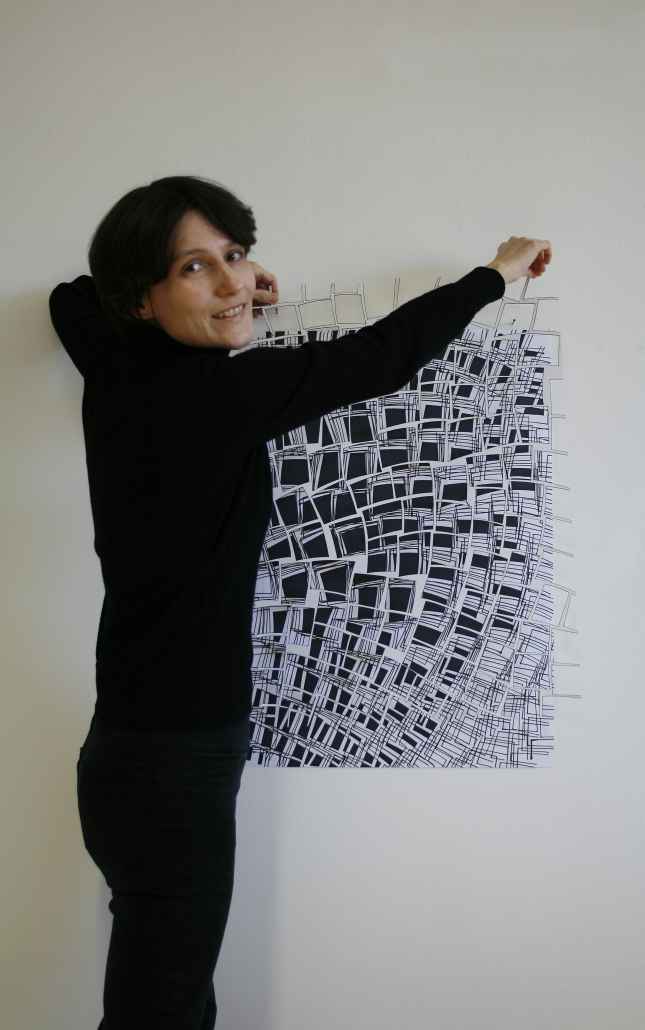
Violetta Elisa Seliger (*1980 in Düsseldorf, Germany) trained at the State Drawing Academy in Hanau and worked in Chicago and Vicenza before becoming a freelance artist in 2007. Her work explores material, form and structure at the intersection of art and design, combining elements of paper art, jewellery, objects and sculpture. The artist has exhibited nationally and internationally, and her works can be found in various collections, including the Museum Ritter and the Museum Art.Plus. In 2025, she received third prize in the 7th International André Evard Prize. Violetta Elisa Seliger lives and works in Berlin.
Tanja Selzer
‘Trotz’ / ‘Defiance’ – resistance, beauty, hope
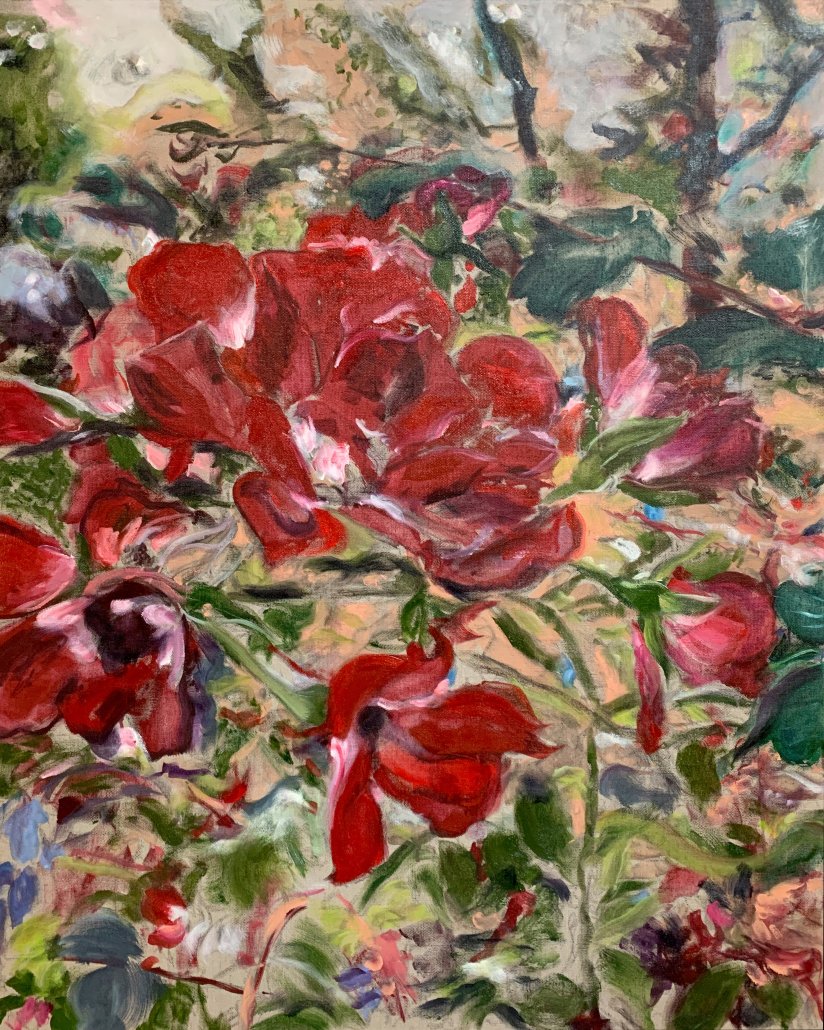
Love in the Park, 2025
Oil on canvas, 100 x 80 cm
Tanja Selzer’s paintings express freedom, closeness to nature, eroticism and individuality, but also vulnerability. Real and mythical creatures seek to seduce the viewer into leading a free and self-determined life in a safe place. In the works in her exhibition Wild Claims, the creatures depicted began to connect with nature in a painterly way. In search of greater abstraction, this development has continued in the artist’s new paintings – the figures have dissolved, but remain palpable as an energetic presence. This is also the case in Love in the Park, which the artist selected for the Vertical Horizon exhibition. Bodies and floral forms merge, dissolving into abstract areas of colour in which life continues to have an effect. ‘The Bacchanalia – Becoming … Selzer is interested in this exuberant Bacchanalian power, which she transforms into an omnipresent plant world, dissolving it into a field of colour energy.’ Heike Fuhlbrügge – Der Weg ins Grenzenlose
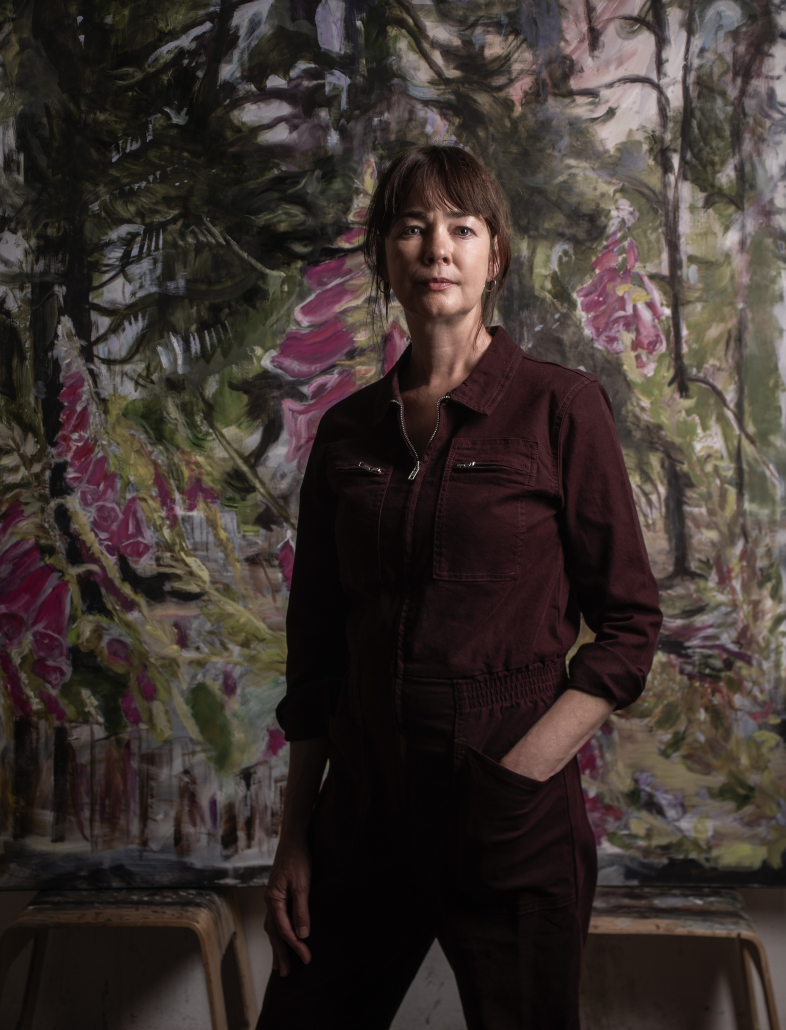
Tanja Selzer (*1970 in Rhineland-Palatinate, Germany) completed her studies at the Hamburg University of Applied Sciences in the Design Department, specialising in painting. Since 2005, her works have been exhibited in Germany and abroad and are represented in public and private collections. The artist is a member of the MalerinnenNetzWerk Berlin-Leipzig and the Saloon-Berlin and lives and works in Berlin.
Mathias Vef
‘Trotz’ / ‘Defiance’ – resistance, beauty, hope
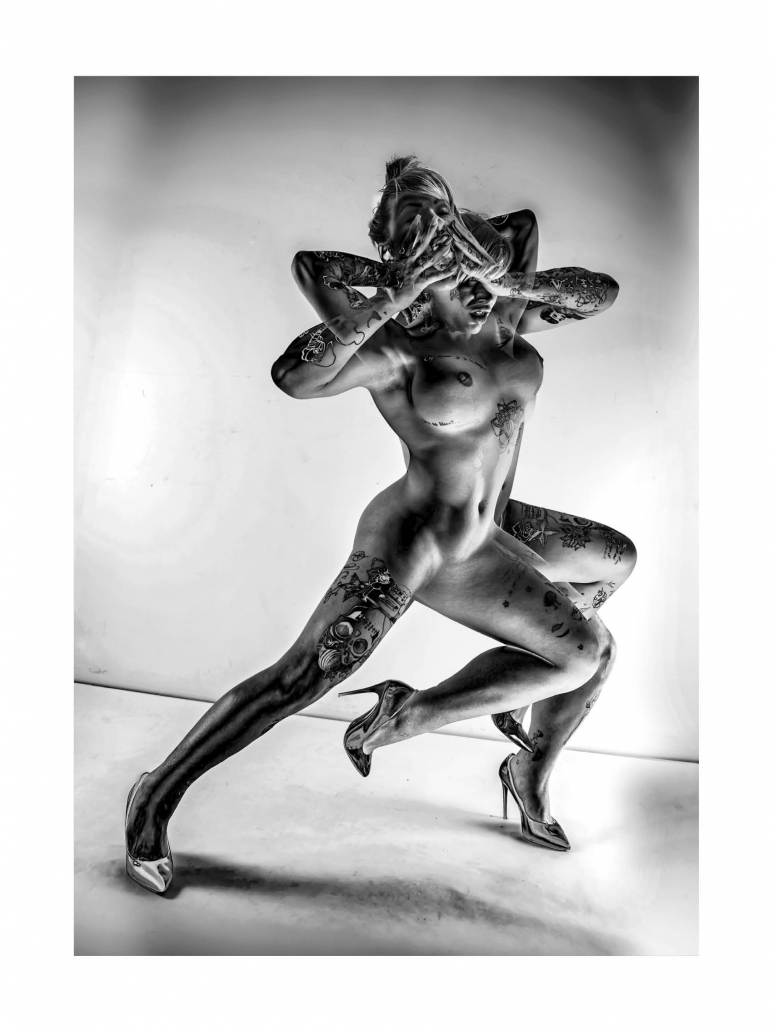
Androniki C03 Noir Edition, 2025
Archival Pigment Giclée Print on Hahnemühle Pearl Fine Art Paper, 80 x 60 cm
Edition: 1/5 + 1 AP
The collage shows Androniki, a trans woman, covering her face and pushing forward with a tense posture. The moment appears raw, direct, almost aggressive – and at the same time full of tenderness. Here, concealment is not interpreted as withdrawal, but as a gesture of self-protection and self-assertion. Covering the face becomes a form of speech, an act of defiance: ‘I decide what you are allowed to see.’ What interests the artist in this work is the simultaneity of strength and vulnerability, of beauty and resistance. The body becomes the stage for an inner conflict, a place where identity is negotiated and redefined. The image asks what visibility means when visibility is both danger and empowerment. In the context of Vertical Horizons, this portrait stands for an upright, physical defiance. It does not show a victim role, but rather the moment of ‘I am here’ – silent, but unmistakable. In times when queer and trans bodies are once again being politically instrumentalised and threatened, the image is a commitment to the dignity of the self, to the beauty of the unique, to the freedom to withdraw and yet be present.
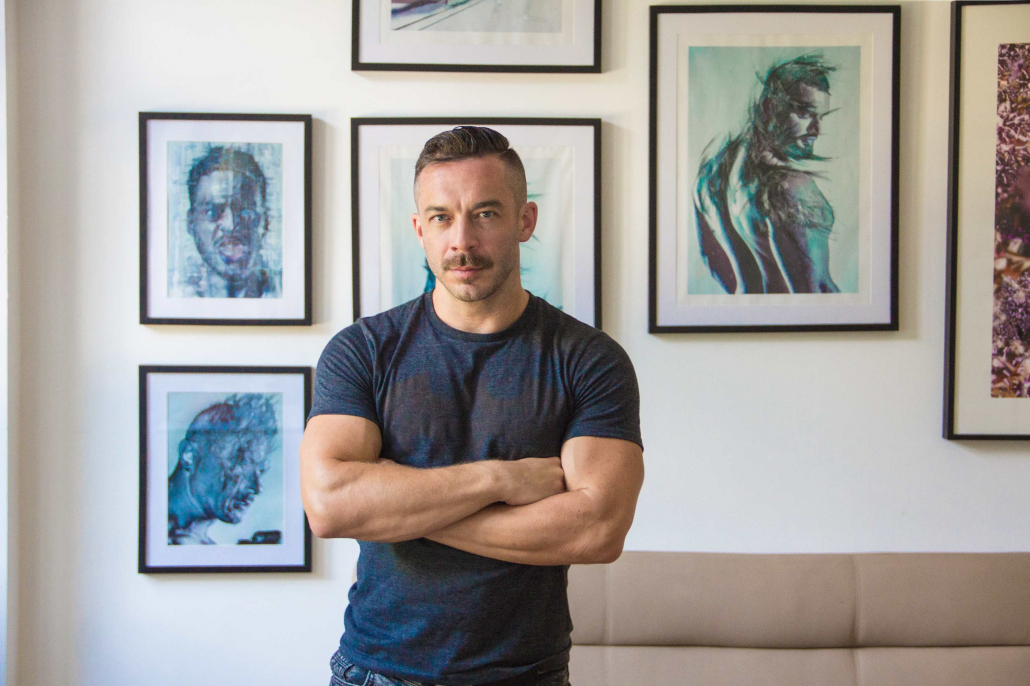
Mathias Vef (*1976 in Wiesbaden, Germany) studied at the Royal College of Art in London after starting out in the natural sciences. Since 1998, he has been researching the body and identity and realising these artistically in photographs, videos and 3D scans, among other things. He is internationally recognised with numerous awards and residencies. The NUCA project with Benedikt Groß thematises generative AI and its effects on image reproduction. His works are exhibited worldwide. Mathias lives and works in Berlin.
Martin A. Völker
‘Un-Orte’ / ‘Non-places’ – spaces of exclusion and encounter
Took a Walk With ICE, 2025
Photography/Double shot, collaged,
C-Print onHahnemühle Photo Rag metallic 340 g,
on Alu-Dibond, 100 x 75 cm
Unique work
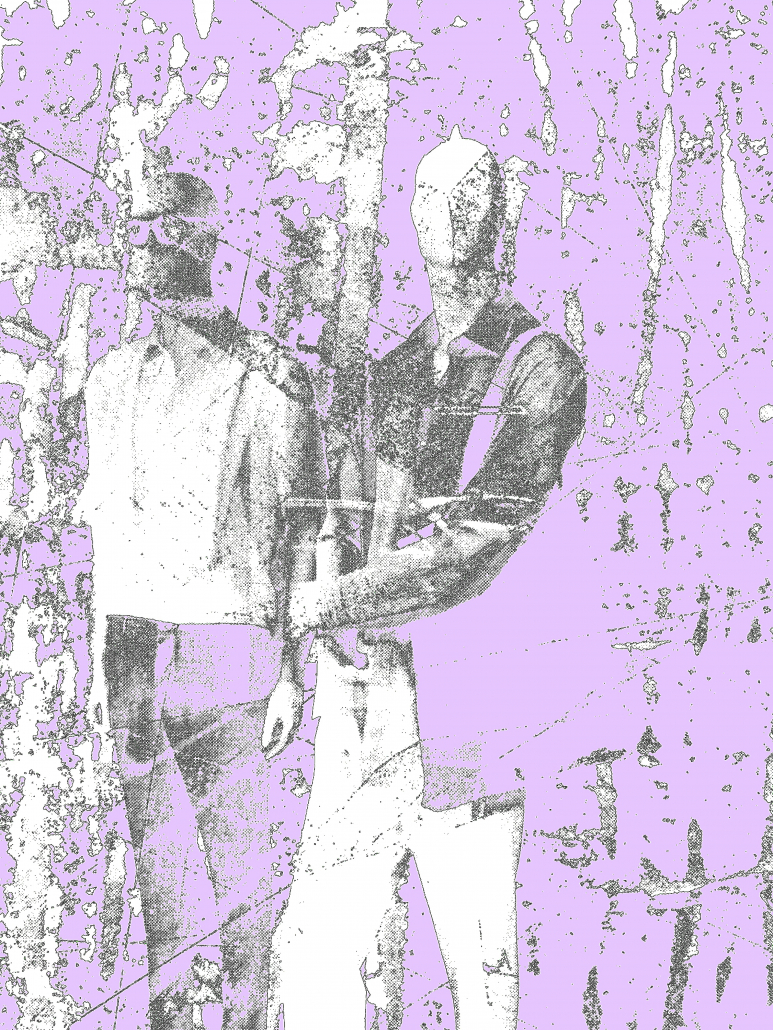
The work addresses developments in the United States, where the state order undermines social peace and citizens are attacked by military forces. These serious assaults and violations of human dignity take place in broad daylight, as if they were as commonplace as a walk in the park in spring. The image plays with the idea of accepting such events, which we consume daily via social media, as normal, even though they are not. There is a danger of becoming accustomed to inhumanity, which completely exposes those who are vulnerable today to the powerful. This habituation leads us to forget that we ourselves are vulnerable if the state decides that we should be next. Martin A. Völker: “For me, art is not a space that excludes society. All social dynamics, abysses and hopes are condensed in the work, so that phenomena that are consciously overlooked in everyday life find their powerful, lasting expression in art. The blind spot becomes a radiant centre of attraction. Art offers resistance by developing a new awareness, a new sensitivity and a will that does not tolerate degrading behaviour. New perspectives and modes of representation herald the new awareness that inscribes itself into every observation and captures so many people until critical mass is reached.”
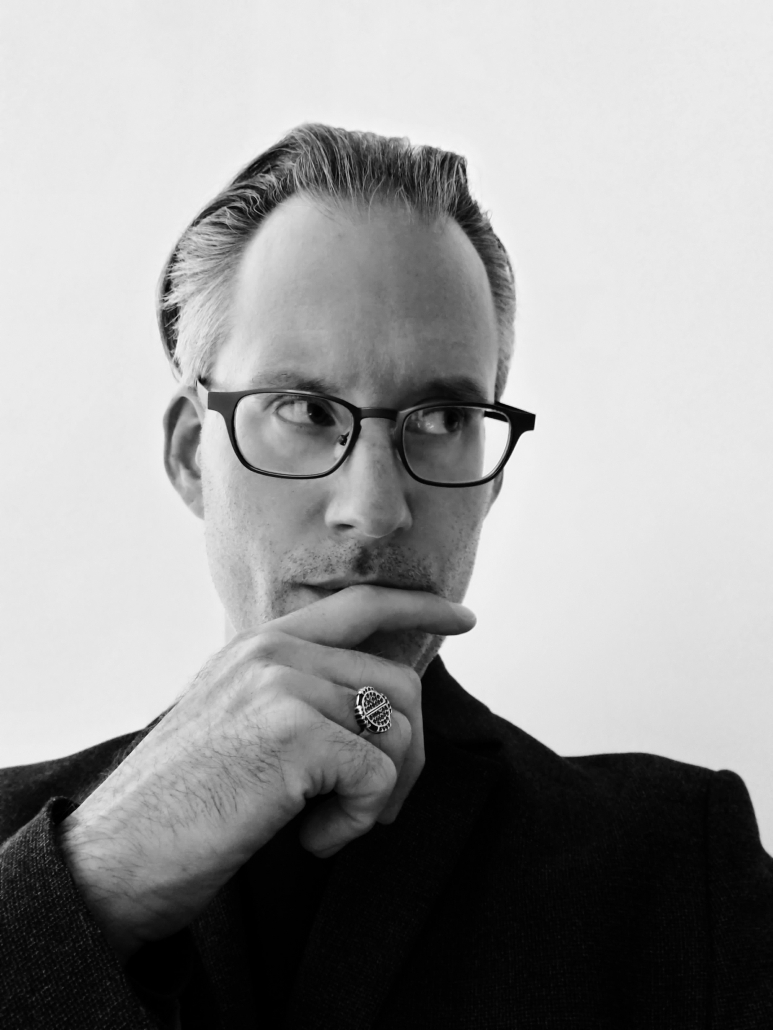
Martin A. Völker (*1972 in West Berlin, Germany) is a writer and art photographer specialising in conceptual street photography. He captures the diversity of urban life and develops street photography in the direction of magical realism. He is influenced by his many years as a lecturer in cultural studies and aesthetics at Berlin’s Humboldt University. His work has been shown in numerous solo and group exhibitions. Martin lives and works in Berlin.
PERFORMANCE:
Leonie Vogel
‘Ver-Letzt’ – vulnerability, dignity and the power of acceptance
UmSichtbar, I see something you don’t see, 2026
Performance
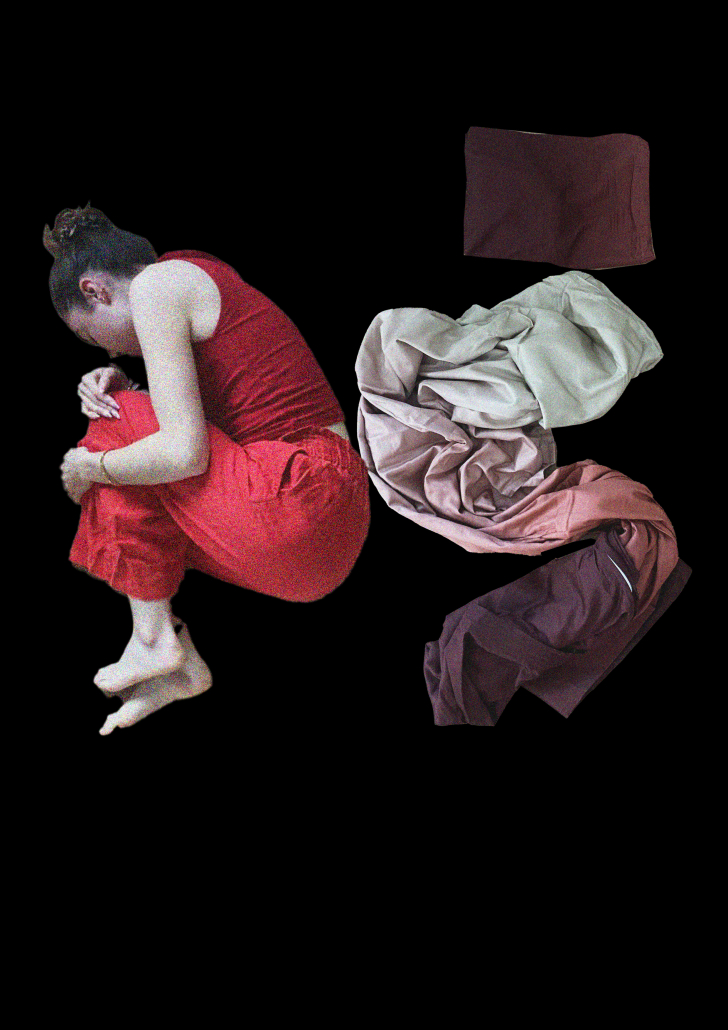
Leonie Vogel plans the performance at the vernissage with an audience that is in motion, that can come and go. The performance is, so to speak, part of the ongoing exhibition space and not frontal. One of my ideas is to repeat the performance at short intervals throughout the evening. The idea behind this is to make habitual cycles/thought patterns tangible and to thematically address breaking out of cycles. The artist works with a large-format, improvised material figure made of bed sheets. This figure is about as tall as she is, but without its own posture. She lends it parts of her body and fragments of her own movement. This creates a fragile shared being. However, the material ‘bed sheet’ should not be lost, but remain visible and tangible and be part of the performance. It transforms itself in a practical, sculptural way, thus addressing the theme of changing perspectives on a performance level as well. Moving from the vertical to the horizontal, waking up, sitting up straight and leaving the comfort of the bed. For the artist, the bed symbolises fragility. A position in which everyone is vulnerable and exposed, but in which visions and dreams can also arise. It is the scene of many profound human experiences, expectations and role models, such as insomnia and premonitions. Often, however, it is also the place where an entire life is lived, for example in the case of illness. The core of the performance is to be the veiling and unveiling of humanity, making the invisible tangible and visible.
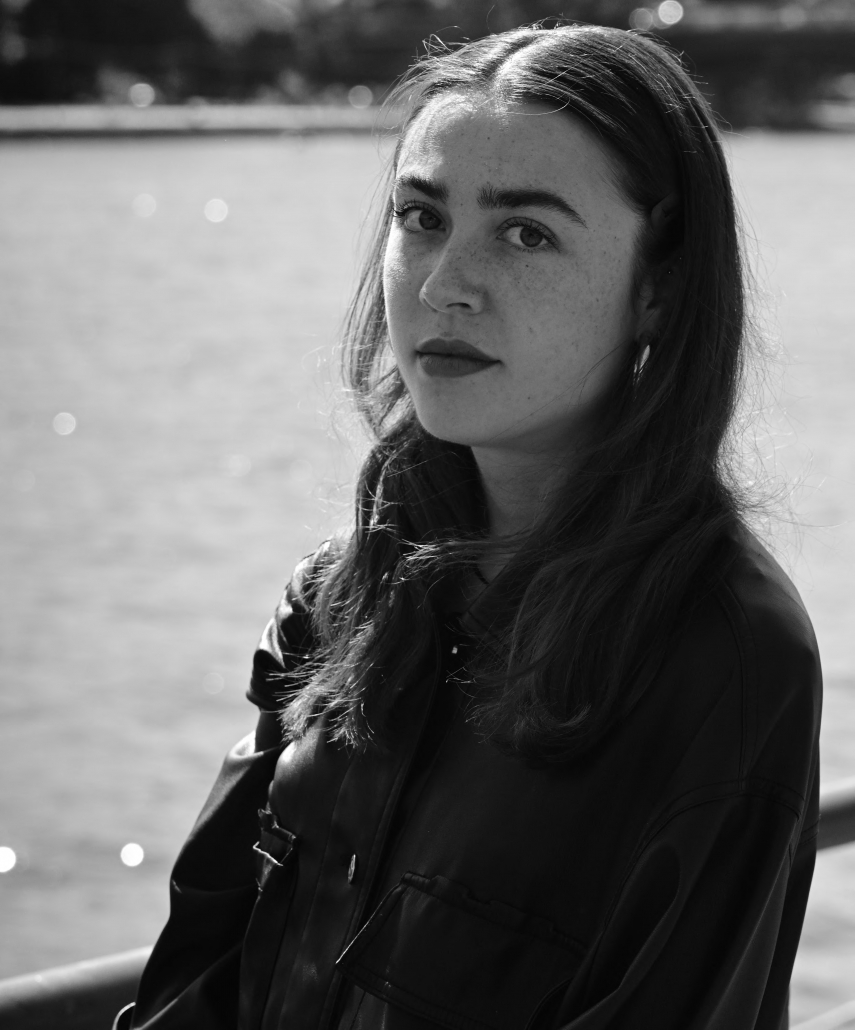
Leonie Vogel (*2001 in Stuttgart, Germany) is an artist and graphic designer. She discovered her passion for illustration, materials and physicality during her training. Her work in puppet theatre deepened her interest in figurative art and its expressive power. Language also plays a central role for her, especially in poetry slams, where she translates thoughts into movement. She is self-taught and combines text, figures and objects to create independent, experimental works. The artist lives and works in Stuttgart.
VERTICAL HORIZONS Group exhibition
09. January – 21. February 2026
Vernissage: Thursday, 08. January 2026, 6 p.m.
Venue: nüüd.berlin gallery, Kronenstr. 18, 10117 Berlin-Mitte, U Stadtmitte
Open: Wed – Sat, 12 – 6 p.m. & by appointment
